
Signs Your Child Is Being Bullied in a Japanese School

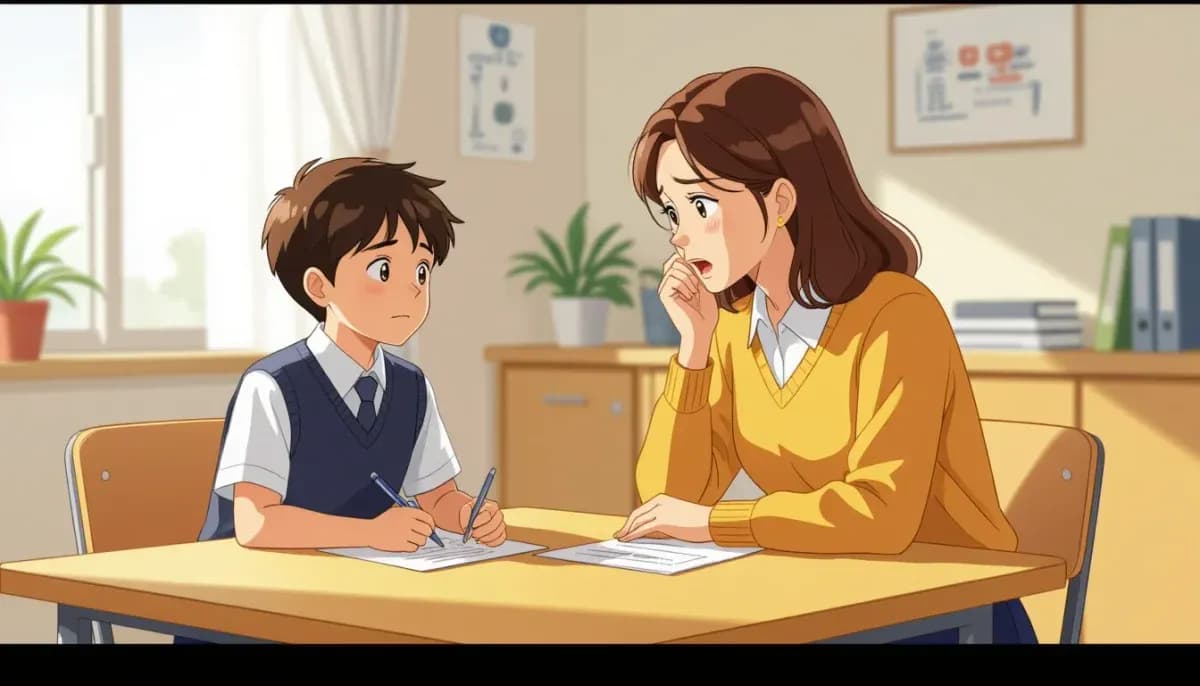
Learn to recognize the signs of ijime (bullying) in Japanese schools. With 769,022 bullying cases in FY2024, foreign parents need to know the warning signs, types of bullying, and how to take action to protect their child.
Signs Your Child Is Being Bullied in a Japanese School
As a foreign parent raising children in Japan, one of your most pressing concerns is whether your child is happy and safe at school. Japan's school system can be a wonderful environment for children, but it also has a well-documented bullying problem known as ijime (いじめ). With a record-breaking 769,022 bullying cases reported in FY2024 — the highest number ever recorded and a 5% increase from the previous year — understanding the warning signs is more important than ever.
This guide will help you recognize the signs that your child may be experiencing ijime, understand how Japanese school bullying works, and know what steps to take to protect and support your child.
What Is Ijime? Understanding Bullying in Japanese Schools
Ijime is the Japanese term for bullying, but it carries cultural nuances that differ from Western conceptions of the problem. Japan's Ministry of Education (MEXT) defines ijime as "an act by a student or students toward another student that causes physical or psychological suffering, as judged from the standpoint of the child who feels bullied."
What makes ijime particularly difficult for foreign families to detect is that 80–90% of bullying in Japan is psychological rather than physical. The most common form is nakama hazure — deliberate group exclusion or ostracism — where a child is systematically shut out by their classmates. This can be invisible to teachers and parents until the damage is severe.
According to a peer-reviewed study published in Psychiatry and Clinical Neurosciences, 35.8% of Japanese students in grades 4–9 are bullying victims, with verbal bullying being the most prevalent type (affecting 19.5% of students). Critically for foreign families: 52.2% of bilingual or non-Japanese-speaking students reported bullying victimization, compared to 34.9% for native Japanese speakers. Children who look different, sound different, or behave differently from their peers face significantly higher risk.
Bullying peaks between Grade 5 elementary school and first-year junior high (around age 11–13), a period of intense social pressure and group formation. If your child is in this age range, vigilance is especially important.
For a broader overview of the Japanese school system, see our Complete Guide to the Japanese Education System for Foreign Families.
Behavioral Signs Your Child May Be Being Bullied
Children rarely come straight out and say "I'm being bullied." In Japan especially, where children are culturally taught to mask emotions and avoid causing trouble for others, the signs are often subtle. Watch for changes in your child's behavior, mood, or habits — particularly if they emerge or worsen around school days.
The most important warning signs include:
- Reluctance or refusal to go to school — Sudden complaints of stomachaches, headaches, or other physical ailments that conveniently disappear on weekends are classic indicators. Japan's school absentee numbers have reached 353,970 students — a 12th consecutive record high — and bullying is a leading driver.
- Withdrawal from friends and social activities — If your child used to mention classmates and playmates but has gone quiet, something may have changed socially.
- Coming home hungry despite taking lunch — Bullies in Japan often steal or destroy younger children's lunches or force them to give their food away.
- Damaged or missing belongings — Torn bags, broken stationery, or mysteriously lost items can indicate physical harassment disguised as "play."
- Asking for extra money or taking money from home — Children being extorted by classmates may ask for cash under vague pretenses.
- Excessive anxiety about their phone or social media — Online bullying via LINE group chats and other platforms is increasingly common. A child who panics if you glance at their phone may be receiving harassing messages.
- Nightmares, sleep disturbances, or sudden bedwetting — Psychological stress manifests physically, especially in younger children.
- Loss of self-confidence or expressions of worthlessness — Statements like "I'm no good at anything" or "nobody likes me" should never be dismissed as typical moodiness.
For information about supporting your child's emotional health, visit our guide on Mental Health and Emotional Wellbeing for Foreign Children in Japan.
Warning Signs Specific to Foreign and Bilingual Children
Foreign children and children of mixed heritage (hafu) face additional risks that parents should understand. The homogeneity of most Japanese classrooms means that children who stand out — whether in appearance, language ability, or cultural behavior — can become targets.
Signs that may indicate your child is being targeted for their cultural or linguistic background:
- Shame or embarrassment about their heritage language — If your child was once proud to speak English (or another language) but now insists on speaking only Japanese and begs you not to speak your native language at school pickup, peer pressure or mockery may be behind it.
- Refusing to bring culturally different items to school — Embarrassment about "different" lunches, non-Japanese clothing, or foreign snacks can be driven by peer ridicule.
- Reports of being excluded from group activities — Japanese bullying often takes the form of the entire class turning against one student, sometimes with implicit or explicit teacher awareness.
- Distress around school events — Sports festivals, class trips, and cultural events require strong group membership. A child who dreads these events may be socially isolated at school.
If your child struggles with identity questions related to their mixed background, our article on Cultural Identity for Hafu and Mixed-Race Children in Japan offers helpful context.
Types of Ijime: What Japanese School Bullying Looks Like
Understanding the forms bullying takes in Japanese schools helps you ask the right questions and recognize patterns your child may describe.
| Type of Ijime | Description | Difficulty to Detect |
|---|---|---|
| Verbal harassment | Name-calling, insults, repeated mocking | Medium — child may mention "teasing" |
| Nakama hazure (exclusion) | Group ostracism, silent treatment, being left out | High — child may blame themselves |
| Physical bullying | Hitting, pushing, property damage | Low — visible marks or broken items |
| "Play-acting" violence | Rough play disguised as jokes | High — dismissed as "just playing" |
| Online/SNS harassment | Insulting LINE messages, fake profiles, shared embarrassing content | Very high — happens on private devices |
| Extortion | Demanding money or possessions | High — child hides it out of shame |
| Forced acts | Making the victim do embarrassing or humiliating things | High — victim is too ashamed to report |
Online bullying via LINE group chats has grown dramatically and can follow children into their homes 24 hours a day, making it particularly damaging.
How to Talk to Your Child About Bullying
One of the biggest mistakes parents make is asking directly: "Are you being bullied?" Most children — and Japanese children especially — will deny it, either out of shame, fear of worsening the situation, or not wanting to worry their parents.
Instead, try these more effective approaches:
- Ask about specific social situations — "Who did you eat lunch with today?" or "Who do you play with at recess?" are less threatening than direct questions.
- Make conversations routine — Daily, low-pressure check-ins create a safe space for your child to share without it feeling like an interrogation.
- Share your own experiences — Normalizing difficulty ("When I was in school, sometimes other kids would leave me out...") makes it easier for children to admit their own struggles.
- Listen without immediately problem-solving — Children often need to feel heard before they can move to solutions. If you react with immediate alarm, they may shut down.
- Watch for non-verbal cues — Body language during conversations about school, or when you mention certain classmates' names, can reveal more than words.
For context on how Japanese school culture works, see our guide to Elementary School in Japan: A Complete Guide for Foreign Parents and Junior High School in Japan: Guide for Foreign Families.
What to Do If You Suspect Your Child Is Being Bullied
If you believe your child is experiencing ijime, acting quickly and methodically is essential. Japan's 2013 Ijime Prevention Methods Promotion Law legally requires schools to investigate reports, respond promptly, and develop anti-bullying systems. You have legal backing to demand action.
Practical steps for foreign parents:
- Document everything — Keep a written log of dates, incidents your child describes, any visible injuries, damaged property, and screenshots of online messages.
- Consult the homeroom teacher first — In Japan, the homeroom teacher (tanin) is the primary point of contact for school issues. Request a private meeting and present your concerns calmly and factually.
- Escalate to the principal if needed — If the homeroom teacher's response is insufficient, request a meeting with the principal (kōchō sensei) and the student guidance counselor (seikatsu shidō).
- Use external resources — Japan has a national 24-hour Children's SOS Hotline (0120-0-78310) as well as the TELL Lifeline for English-speaking families in Japan (0800-300-8355, 9 AM–11 PM). For English consultation, TELL Japan's bullying resources are an excellent starting point.
- Consider school transfer — If the school fails to resolve the situation or your child's wellbeing is at serious risk, transferring to another school — including an international school — is a legitimate option.
For comprehensive guidance on navigating this process, the Living in Nihon school refusal and bullying support guide provides detailed steps for foreign families facing this situation in Japan. For multicultural families, For Work in Japan's parenting advice for foreign families also covers useful strategies.
For more on legal options available to foreign families in Japan, see our guide on Visa and Legal Issues for Foreign Families with Children in Japan.
English-Language Support Resources for Bullying in Japan
One of the biggest challenges foreign parents face is navigating the Japanese school and social welfare system in a second language. Fortunately, several English-language resources exist:
| Resource | Contact | Notes |
|---|---|---|
| TELL Lifeline | 0800-300-8355 (9 AM–11 PM) | English mental health & crisis support |
| Childline Japan | 0120-99-7777 (4–9 PM daily) | Anonymous, for children under 18 |
| 24-Hour Children's SOS Hotline | 0120-0-78310 | Japanese only but free and available 24/7 |
| Foreign Language Human Rights Consultation | 0570-090911 | Available in 10 languages including English |
| Tokyo Metropolitan Education Consultation Center | 03-3360-4175 | English consultations on 1st Friday of each month, 1–5 PM |
For additional academic context on bullying prevalence and its psychological effects in Japan, the PMC research study on Ijime scale and bullying prevalence provides peer-reviewed data. The Savvy Tokyo comprehensive guide to ijime in Japanese schools is also an excellent English-language resource for parents.
Conclusion
Recognizing the signs of bullying in a Japanese school requires understanding both universal warning signs and the specific cultural dynamics of ijime. Because Japanese bullying is predominantly psychological — invisible to outsiders — and because Japanese children are taught to suppress their emotions, parents need to be proactive, observant, and willing to ask questions.
If your child is at the age where bullying peaks (Grade 5 through first-year junior high), if they are visibly different from their peers, or if they have recently joined a new school, be especially attentive to changes in their behavior, mood, and relationship with school.
You don't have to navigate this alone. Japan has legal protections in place, English-language support services are available, and a community of foreign parents has walked this path before you. The most important thing is to keep the lines of communication open with your child — so that if they ever need to tell you something hard, they know you are there to listen.
For more on supporting your child in the Japanese school system, explore our Complete Guide to the Japanese Education System for Foreign Families and our guide on Raising Bilingual Children in Japan.

Originally from Vietnam, living in Japan for 16+ years. Graduated from Nagoya University, with 11 years of professional experience at Japanese and international companies. Sharing practical information for foreign parents raising children in Japan.
View Profile →Related Articles
Recovery and Building Resilience After Being Bullied
Learn how to help your child recover from bullying (ijime) in Japan. Practical steps, support resources, and proven resilience strategies for foreign families navigating Japanese schools.
Read more →
Bullying Prevention Strategies Parents Can Use
Learn effective bullying prevention strategies for parents raising children in Japanese schools. Understand ijime culture, warning signs, school escalation steps, and English support resources for expat families.
Read more →
When to Consider Changing Schools Due to Bullying
Learn the warning signs, escalation steps, and school transfer process for bullied children in Japan. A practical guide for foreign parents navigating ijime in Japanese schools.
Read more →
Peer Pressure and Conformity Challenges in Japanese Schools
Understand how conformity culture and peer pressure affect children in Japanese schools — especially foreign and mixed-heritage kids. Practical strategies, warning signs, and expert guidance for expat families.
Read more →
The Role of Teachers in Preventing Bullying in Japan
Learn how Japanese teachers prevent and respond to bullying (ijime). Understand the 2013 law, teacher responsibilities, systemic barriers, and what foreign parents can do.
Read more →
Bullying of Foreign Children in Japanese Schools
Foreign children in Japan face a 52.2% bullying rate if they speak a non-Japanese language at home. Learn the warning signs, how to report ijime, and what resources are available to protect your child.
Read more →