
Typhoon Safety Tips for Families in Japan

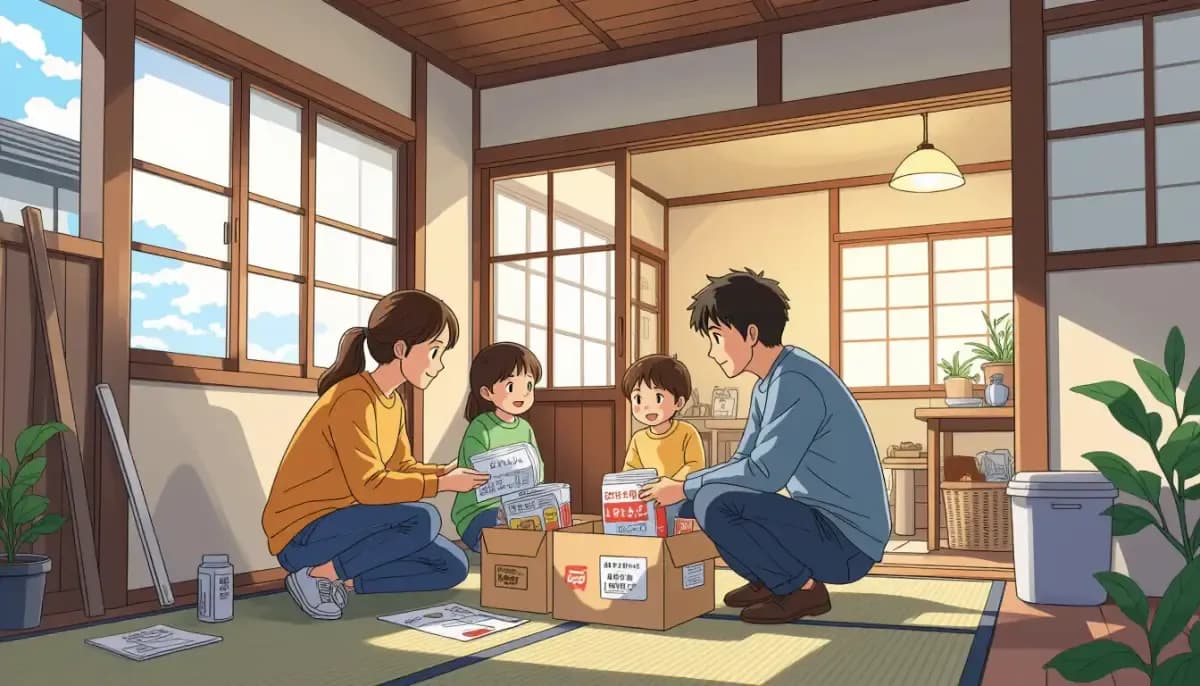
Learn how to protect your family during typhoon season in Japan. Covers Japan's 5-level alert system, emergency kit essentials, evacuation procedures, and tips for foreign families with children.
Typhoon Safety Tips for Families in Japan
Japan is one of the most typhoon-prone countries in the world. With an average of 25 tropical cyclones forming each year and around three directly striking the main islands, typhoon preparedness is not optional — it is essential. For foreign families raising children in Japan, understanding how to stay safe before, during, and after a typhoon can make a critical difference when the next big storm arrives.
This guide covers everything you need to know: Japan's alert system, what to pack in your emergency kit, how to protect your home, where to go if you need to evacuate, and how to talk to your children about typhoon safety.
Understanding Japan's Typhoon Season and Alert System
Typhoon season in Japan runs from July to October, with August and September being the most active months. The Japan Meteorological Agency (JMA) records an average of 5.7 storms in August and 5.0 in September. Regional risk varies significantly:
| Region | Annual Typhoon Risk | Average Typhoons/Year |
|---|---|---|
| Okinawa | Extreme | 7–8 |
| Kyushu & Shikoku | High | 1–3 |
| Honshu (Tokyo, Osaka) | Moderate | 1–2 |
| Hokkaido | Low | Less than 1 |
Japan uses a 5-level alert system that all residents — including foreign families — must understand:
- Level 1 (Blue): Stay informed and monitor updates
- Level 2 (Yellow): Review your evacuation procedures
- Level 3 (Orange): Vulnerable populations (elderly, disabled, families with infants) should evacuate
- Level 4 (Red): All residents must evacuate immediately
- Level 5 (Black): Life-threatening conditions are already present — take immediate action to save your life
The JMA also issues specific warnings including 暴風警報 (storm/violent wind warnings), 大雨警報 (heavy rain and mudslide warnings), 洪水警報 (flood warnings), 高潮警報 (high tide and coastal flooding warnings), and 波浪警報 (high wave warnings). For real-time tracking, visit the JMA official website.
For general guidance on living in Japan safely, Living in Nihon offers helpful resources for expats and foreign residents.
Building Your Family Emergency Kit
One of the most important steps you can take before typhoon season starts is assembling a proper emergency supply kit. Experts recommend preparing for at least 72 hours of self-sufficiency, and ideally up to a week.
Water: The standard recommendation is 3 liters per person per day for a minimum of three days. For a family of four, that is 36 liters minimum. Store water in portable, sealed containers.
Food: Choose non-perishable items your children will actually eat — instant rice, canned goods, crackers, energy bars, dried fruit. Include a manual can opener.
Documents: Keep copies of passports, residence cards (在留カード), health insurance cards, and emergency contact numbers in a waterproof bag. Digital backups stored in the cloud are also helpful.
Essential supplies:
- Flashlights and spare batteries (or hand-crank lanterns)
- Portable phone chargers / power banks
- Hand-crank or battery-powered radio for emergency broadcasts
- First aid kit including any prescription medications (aim for a 7-day supply)
- Cash in small denominations (ATMs and card readers may go offline)
- Warm clothing and rain gear for each family member
- Baby supplies if applicable (formula, diapers, wipes)
- Comfort items for young children (a favorite toy or book can ease stress)
For workers in Japan looking for broader emergency planning resources, For Work in Japan provides useful guidance for foreign residents.
Protecting Your Home Before a Typhoon Hits
Advance preparation can significantly reduce damage to your property. When a typhoon warning is issued, take these steps:
Outdoors:
- Bring inside or securely tie down anything on your balcony — flowerpots, laundry poles, bicycles, garbage bins, and outdoor furniture can become dangerous projectiles in high winds
- Inspect and secure any loose roof tiles or external fixtures
- Clean gutters and drains to reduce flooding risk
Indoors:
- Close all windows and shutters (雨戸 amado) — most Japanese homes have storm shutters; use them
- Draw curtains and close blinds to reduce injury risk from broken glass
- Seal gaps around window frames with rags or towels to reduce water intrusion
- Move valuables and electronics off the floor and onto elevated surfaces in case of flooding
- Fill your bathtub with water as an emergency reserve for flushing and cleaning
At 45 mph winds, people cannot stand straight and driving becomes dangerous. At 50 mph, trees can be uprooted. Do not go outside once a typhoon is underway — the calm of the eye passing over can be deceptive, and the back wall of the storm is just as dangerous as the front.
The Tokyo Cheapo typhoon guide has practical advice specifically for residents of Tokyo and surrounding areas.
Evacuation: What to Do and Where to Go
If your local government issues a Level 3 or Level 4 evacuation alert, follow instructions promptly. Here is how to navigate evacuation in Japan as a foreign family:
Find your evacuation shelter in advance. Every neighborhood has designated 避難所 (hinanjo, evacuation shelters), usually at local schools, community centers, or public halls. Locate yours before typhoon season begins — do not wait until a storm is approaching. Your city or ward office website will have this information, often in English.
What to bring to the shelter:
- Your emergency kit (or a grab bag with essentials)
- ID documents (passport and residence card)
- Medications and baby supplies
- Shoes that are easy to remove (Japanese shelters typically require removing footwear at the entrance)
At the shelter: Register with staff upon arrival, present your ID, and follow instructions. Food, water, and blankets are distributed equally to all evacuees regardless of nationality. Staff may not speak English fluently, so knowing a few key phrases helps:
- 避難所はどこですか? — Hinanjo wa doko desu ka? — Where is the evacuation shelter?
- 助けてください — Tasukete kudasai — Please help me
- 日本語がわかりません — Nihongo ga wakarimasen — I don't understand Japanese
- アレルギーがあります — Arerugī ga arimasu — I have allergies
- 薬が必要です — Kusuri ga hitsuyō desu — I need medicine
Be aware that public transport shuts down during and before major typhoons. Japanese rail operators proactively cancel or suspend service 12–24 hours before a major storm. Flights, expressways, and ferry services also close. Plan evacuation routes that do not depend on trains or buses.
For resources on studying Japanese to help in emergency situations, Chuukou Benkyou provides excellent learning materials for foreign residents.
You may also want to read our related guide on creating a family disaster communication plan and building an emergency supply kit for additional preparation steps.
Staying Safe During the Typhoon
Once the typhoon has arrived, your top priority is to stay indoors and wait it out. Avoid:
- Going near rivers, beaches, canals, or any body of water — water levels rise rapidly and unpredictably
- Building construction sites, which may have fallen scaffolding
- Areas known for waterlogging or flooding
- Low-lying underpasses or tunnels that can fill with water quickly
Monitor conditions through official channels:
Essential apps for foreign families:
- Safety Tips — Available in 14 languages; sends push notifications for earthquakes, tsunamis, and typhoon warnings
- Yahoo! Disaster Alert (Yahoo!防災速報) — Location-based notifications
- NHK World — English-language emergency broadcasts and news
- JMA App — Real-time typhoon tracking
Emergency phone numbers to have saved:
- 110 — Police (24 hours, English available)
- 119 — Fire and Ambulance (24 hours, English available)
- 118 — Coast Guard / Sea Rescue
- 171 — Disaster Emergency Message Dial (record or listen to messages to contact family)
- 0800-300-8355 — Tell Lifeline (emotional support in English)
If you are sheltering at home during the storm and the roof or walls are compromised, move to an interior room on an upper floor and get under a sturdy table or desk until the storm passes.
For comprehensive guidance on earthquake preparation for families with children, our related article covers many overlapping emergency skills.
After the Typhoon: Recovery and Children's Emotional Wellbeing
Once the storm passes, resist the urge to go outside immediately. Aftermath hazards include:
- Downed power lines — never touch fallen wires; call 119 if you see sparks or fire
- Weakened trees, poles, and fences that may collapse
- Flooded roads and rivers that look calmer but may still be dangerous
- Contaminated tap water in areas with flooding
Document any damage to your property with photographs before cleaning up — you will need this for insurance claims.
For children, typhoons can be frightening experiences. Young children in particular may show signs of anxiety, sleep disruption, or clinginess following a major storm. Maintain routines as much as possible, talk honestly with children about what happened in age-appropriate terms, and reassure them that adults are keeping them safe.
Our article on helping children recover after a natural disaster offers detailed advice on supporting children's mental health in the aftermath of emergency events.
Typhoons in historical context: The deadliest typhoon in Japan's modern history, Typhoon Isewan in September 1959, killed 5,098 people and destroyed or damaged 833,965 homes. Today, modern warning systems, flood barriers, and early evacuation policies have reduced deaths to fewer than 100 in most major typhoon events — a testament to how preparation and community response save lives. You can read more about Japan's typhoon history at Nippon.com.
For a broader understanding of Japan's emergency preparedness landscape for foreign families, the U.S. Embassy typhoon tips page and the Japan Living Life foreigner guide are both excellent resources.
Also see our pillar guide on emergency preparedness and child safety in Japan for a complete overview of staying safe in all disaster scenarios.

Originally from Vietnam, living in Japan for 16+ years. Graduated from Nagoya University, with 11 years of professional experience at Japanese and international companies. Sharing practical information for foreign parents raising children in Japan.
View Profile →Related Articles
Helping Children Recover After a Natural Disaster
A practical guide for foreign parents on helping children recover emotionally and mentally after a natural disaster in Japan, with evidence-based strategies and available support resources.
Read more →
Creating a Family Disaster Communication Plan
Learn how to create a family disaster communication plan in Japan as a foreign resident. Covers 171 dial, Safety Tips app, school protocols, and multilingual strategies for expat families.
Read more →
Emergency Contacts and Helplines for Families in Japan
Complete guide to emergency contacts and helplines for families in Japan. Police 110, ambulance 119, English hotlines, disaster messaging, and mental health support for expat families.
Read more →
Fire Safety at Home with Children in Japan
Essential fire safety guide for foreign families in Japan. Learn about smoke detectors, evacuation hatches, emergency procedures, teaching children fire safety, and protecting your home.
Read more →
Water Safety and Drowning Prevention for Kids in Japan
Essential water safety guide for parents raising kids in Japan. Learn about beach rip currents, river dangers, bathtub risks, emergency contacts, and Japan's drowning prevention resources for expat families.
Read more →
Teaching Children About Stranger Danger in Japan
A complete guide for foreign parents on teaching children about stranger danger in Japan, covering the Kodomo 110-ban safety house system, evening chimes, age-appropriate safety conversations, and how Japan's approach differs from Western stranger-danger messaging.
Read more →