
Celebrating Dual Cultural Heritage at Home

A practical guide for bicultural families in Japan on celebrating dual cultural heritage at home — covering language, holidays, traditions, identity, and community building for children growing up between two cultures.
Celebrating Dual Cultural Heritage at Home: A Guide for Bicultural Families in Japan
Raising children in Japan as a foreign parent means navigating two worlds at once. Your child wakes up in a Japanese neighborhood, attends a Japanese school, and speaks Japanese with friends — yet at home, another culture, language, and identity awaits. Celebrating dual cultural heritage is not just possible; it's one of the most powerful gifts you can give your child. This guide explores practical, meaningful ways to honor both cultures within the walls of your own home in Japan.
Why Celebrating Both Cultures Matters
Research consistently shows that children who develop a balanced bicultural identity — a genuine sense of belonging to both their heritage culture and their host culture — have better psychological adjustment, stronger self-esteem, and more resilient social skills. A study published in academic literature found that children with integrated cultural identities show improved peer relationships and feel more confident in diverse social settings.
Conversely, children who fail to develop an integrated cultural identity may experience a sense of not belonging anywhere. This "cultural in-between" feeling can lead to low self-esteem, withdrawal from social activities, and identity confusion during the critical adolescent years. The stakes are real, but so is the opportunity: families who make culture a conscious part of daily life raise children who are curious, empathetic, and proud of who they are.
Cultural identity doesn't have to be perfect — it just needs to be intentional. It's built through everyday moments: how you speak about your home country, the values you model, and the spaces you create for your kids to feel proud of where they come from.
For more guidance on supporting your child's overall adjustment, see our article on Mental Health and Emotional Wellbeing for Foreign Children in Japan.
Creating Daily Rituals That Blend Both Cultures
The most sustainable way to celebrate dual heritage is through small, consistent daily rituals rather than grand occasional events. Here are practical approaches that bicultural families in Japan have found effective:
Language at Home
Designate specific times or spaces where your heritage language is used exclusively. The kitchen during meal preparation, the bedtime routine, or weekend mornings can become sacred spaces for your home language. Be patient — research shows that heritage language use naturally decreases once children begin Japanese schooling, but a consistent home environment makes a significant difference over time.
Mealtimes as Cultural Bridges
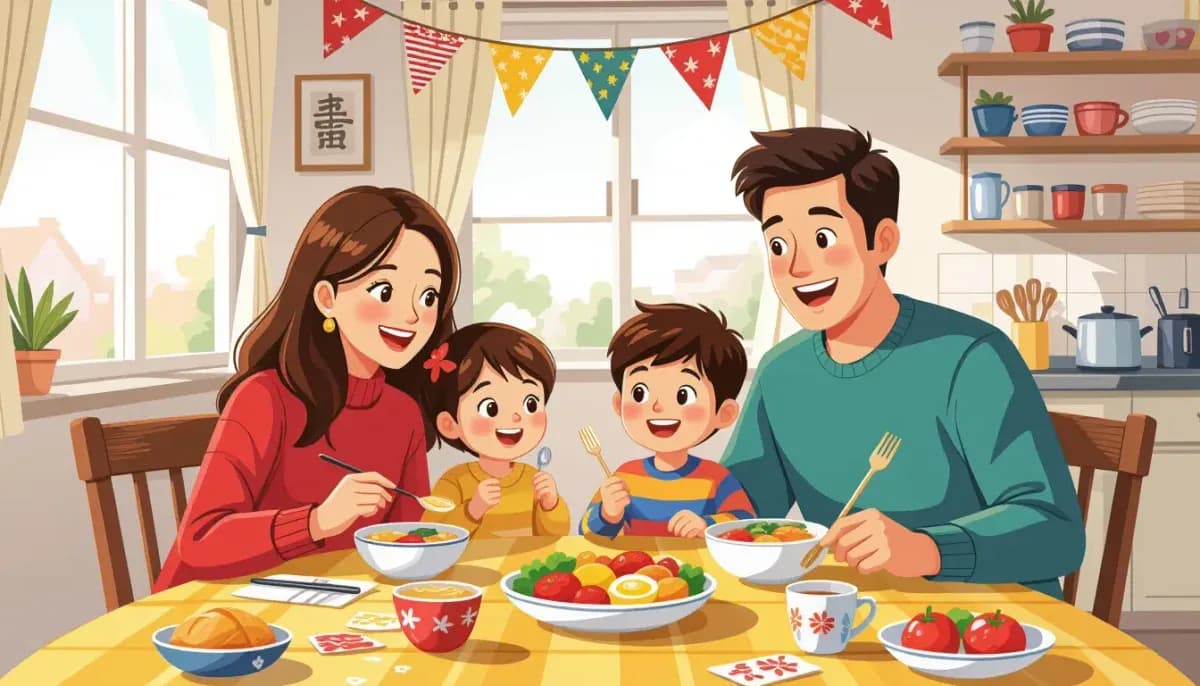
Food is one of the most powerful vehicles for cultural transmission. Cook dishes from your home country regularly, share stories about where the recipes come from, and involve children in the preparation. Many bicultural families in Japan blend menus: Japanese rice alongside Western salads, or Asian soups with traditional side dishes from the home country. Let your child's palate travel between cultures.
Storytelling and Books
Build a bilingual bookshelf. Read stories from your home culture in your heritage language. Introduce your children to folklore, fairy tales, and legends from both countries. This not only preserves language skills but connects children to the broader narrative of where their family comes from.
For strategies on maintaining your child's heritage language, see our dedicated guide on Heritage Language Maintenance for Children in Japan.
Celebrating Heritage Holidays and Traditions at Home
One of the most visible and joyful ways to honor dual heritage is by celebrating the holidays and traditions of both cultures. Living in Japan means your children will naturally absorb Japanese holidays — but you can equally celebrate the holidays of your home country.
| Holiday/Tradition | How to Celebrate at Home in Japan |
|---|---|
| Christmas / Hanukkah / Diwali | Decorate the home, cook traditional foods, involve children in the rituals |
| Japanese Setsubun (February) | Join in bean-throwing rituals with children — an easy, fun tradition to adopt |
| Japanese Kodomo no Hi (May 5) | Display koinobori (carp streamers) while also marking the home culture's spring celebrations |
| Home Country New Year | Cook traditional New Year foods, share stories, video call grandparents |
| Japanese Obon (Summer) | Participate in local neighborhood events while explaining the home culture's traditions around ancestors |
| Home Culture Harvest/Seasonal Festivals | Create home versions with decorations, food, and stories |
The key is not choosing between holidays but layering them. When Setsubun coincides with your home culture's winter traditions, celebrate both. When you can't travel home for a major holiday, bring it to your kitchen and living room in Japan. Read about Japanese school holiday schedules and how they affect family life to plan your cultural celebrations around the school calendar.
Building a Culturally Rich Home Environment
Your physical home can be a powerful statement of dual identity. Consider:
Displaying both cultures visually. Hang artwork, maps, or photographs from both countries. Display traditional crafts or textiles from your home culture alongside Japanese items in your home. Children who grow up surrounded by visual representations of both cultures develop a natural pride in their dual heritage.
Creating a heritage corner. Designate a shelf or corner of the home that houses objects from your home culture — traditional instruments, books, clothing, crafts. These become natural conversation starters and tangible connections to heritage.
Maintaining connections with home. Regular video calls with grandparents, cousins, and family friends in your home country are invaluable. Set up a consistent schedule — weekly Sunday calls, for example — so that extended family becomes a real presence in your child's life despite the distance.
For support in understanding how Japanese society views bicultural children, read our guide on Cultural Identity for Hafu and Mixed-Race Children in Japan.
Language Strategies for Bilingual and Bicultural Children
Language is central to cultural identity, and it's also one of the biggest challenges for bicultural families in Japan. Once children enter Japanese school, the pull toward Japanese becomes overwhelming — and the heritage language can quietly recede.
Proven strategies for maintaining heritage language at home include:
- One Parent, One Language (OPOL): Each parent consistently speaks their own language to the child. This is the most widely recommended approach for bicultural families.
- Home Language Policy: Make a clear rule that at home, the heritage language is used. Japanese can be for the school and outside world.
- Summer Language Immersion: Many bicultural families in Japan report that summer visits to the home country dramatically boost heritage language skills. Extended exposure during school holidays can reverse months of language drift.
- Heritage Language Schools: Look for weekend schools, community classes, or online tutors who can provide structured heritage language education.
- Media in the Heritage Language: Curate a selection of cartoons, books, music, and movies in the heritage language. What children consume for entertainment shapes language fluency profoundly.
See our full guide on Raising Bilingual Children in Japan: Strategies and Best Practices for in-depth support.
Connecting with the Bicultural Community in Japan
One of the most valuable things you can do for your bicultural child is to find and build a community of families with shared experiences. Japan has a growing international community, and in major cities like Tokyo, Osaka, and Nagoya, there are thriving multicultural family networks.
Seek out:
- International parenting groups in your city (many operate through Facebook, Meetup, or community centers)
- Heritage cultural associations — Filipino community groups, American clubs, French associations, and similar organizations regularly hold cultural events
- International schools and after-school programs where bicultural children can connect
- Online communities for expat parents in Japan
As one parent raising a bicultural child noted: "Build (or find) your community. If you can't find others with shared experiences, create space for them." Even small networks of two or three families who share your heritage culture can significantly impact your child's sense of belonging.
Savvy Tokyo's guide on raising multicultural children in Japan offers first-hand accounts from expat parents navigating this journey. For practical information on daily family life in Japan, Living in Nihon provides comprehensive guides for foreigners, including resources on child-rearing and cultural adjustment. For work-life balance and family considerations for foreigners in Japan, check out For Work in Japan, and for Japanese language support for your children, Chuukou Benkyou offers valuable learning resources.
Navigating Cultural Tensions and Identity Questions
As children grow, they may face questions about identity — both from peers and within themselves. Japanese society, while increasingly multicultural, can still send mixed messages about belonging. Your child may face moments of feeling "too foreign" at school or "too Japanese" when visiting your home country.
Prepare for these moments with honest, age-appropriate conversations:
- Validate both identities. Never imply that one culture is "better" or that your child must choose. Frame dual heritage as an asset, not a burden.
- Acknowledge the challenges. It's okay to tell your child that growing up between cultures is sometimes hard, and that the difficulty is real.
- Celebrate the advantages. Bicultural children develop exceptional empathy, language skills, perspective-taking abilities, and adaptability. Help your child see these as genuine strengths.
- Let children lead. Some children will embrace both cultures enthusiastically; others will go through phases of preferring one over the other. Follow their lead and resist forcing participation in cultural activities.
As one parent reflected: "I advocate letting children choose from both cultures organically rather than forcing one perspective. They can pick and choose from both cultures as they like." This organic approach tends to produce the most authentic and durable cultural identity over time.
For understanding how Japan's school system may shape your child's cultural experiences, read our guide on Japanese Education System for Foreign Families.
When to Seek Extra Support
If your child shows signs of significant identity distress — persistent statements of shame about their heritage, refusing to engage with either culture, or social withdrawal related to cultural differences — it may be time to seek additional support. Many cities in Japan have counselors experienced with bicultural and expat families.
Visit Inside Japan's article on real life in multicultural families in Japan offers honest accounts of the challenges families face. For additional guidance on your child's emotional health, see Mental Health and Emotional Wellbeing for Foreign Children in Japan.
Celebrating dual cultural heritage at home in Japan is a daily, evolving practice. There is no perfect formula — only the commitment to show up for both cultures, to create space for your child's full identity, and to trust that the richness of a bicultural childhood will serve them for a lifetime.

Originally from Vietnam, living in Japan for 16+ years. Graduated from Nagoya University, with 11 years of professional experience at Japanese and international companies. Sharing practical information for foreign parents raising children in Japan.
View Profile →Related Articles
Growing Up Bilingual and Bicultural as a Hafu in Japan
A comprehensive guide to raising hafu children in Japan — bilingual development strategies, cultural identity support, school life tips, and community resources for bicultural families.
Read more →
Books and Resources About Being Hafu for Children
A complete guide to the best books, films, communities, and resources to help hafu (mixed-heritage) children in Japan build a strong, positive identity. Includes recommended picture books, documentaries, and online support groups for parents.
Read more →
International Community Support for Hafu Families
Find community support for hafu and mixed-heritage families in Japan. Online groups, non-profits, school resources, and cultural events to help bicultural families thrive.
Read more →
Hafu Children's Experiences in Japanese Schools
Discover what hafu (mixed-race) children experience in Japanese schools — from identity challenges and bullying to bilingual expectations and practical tips for parents raising bicultural kids in Japan.
Read more →
How to Talk to Your Children About Race and Ethnicity
A practical guide for foreign parents and expat families in Japan on how to talk to children about race and ethnicity, mixed heritage identity, and building resilience in a multicultural family.
Read more →
Multicultural Identity Development Stages in Children
Understand the 5 stages of multicultural identity development for children raised in Japan. Practical guidance for expat and mixed-heritage families supporting their kids.
Read more →