
Supporting Your Mixed-Race Child's Self-Esteem in Japan

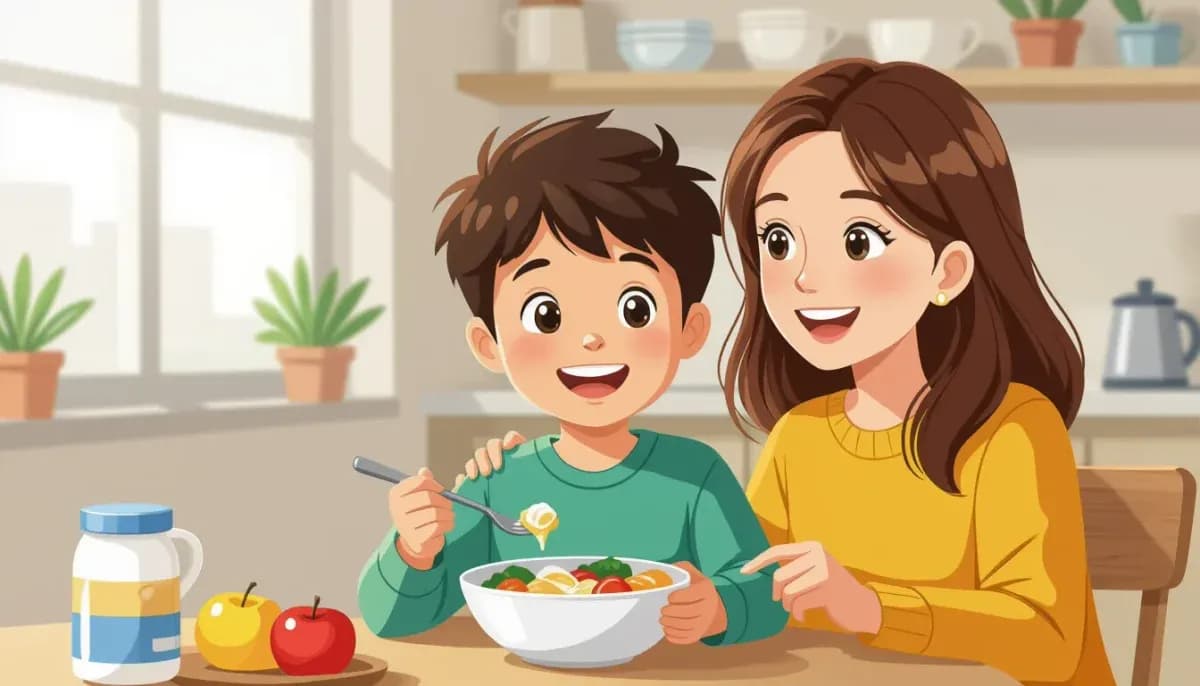
Practical strategies for foreign parents raising mixed-race (hafu) children in Japan. Build your child's identity, bilingualism, and confidence with research-backed advice.
Supporting Your Mixed-Race Child's Self-Esteem in Japan
Raising a mixed-race child in Japan is a journey filled with both remarkable opportunities and unique challenges. Japan remains one of the world's most ethnically homogeneous countries — with 98.5% ethnic Japanese — yet international marriages now account for roughly 1 in 30 unions, and an estimated 1 in 49 babies born in Japan today has at least one non-Japanese parent. If you are a foreign parent raising a hafu (ハーフ) or mixed-heritage child in Japan, you are not alone, and building your child's self-esteem from an early age will set them up for a confident, fulfilling life.
This guide covers practical, research-backed strategies to help your mixed-race child develop a strong, positive identity — embracing all of who they are.
Understanding What "Hafu" Means — and Why Words Matter
The word "hafu" (ハーフ) comes from the English word "half" and became common in 1970s Japanese media. Today it is still widely used, but many parents and advocates prefer "daburu" (ダブル, "double") — a term that emerged in the 1990s as an explicitly positive alternative emphasizing dual heritage rather than incompleteness.
Other terms you may encounter:
| Term | Meaning | Tone |
|---|---|---|
| ハーフ (hafu) | Half — one foreign, one Japanese parent | Neutral/common but debated |
| ダブル (daburu) | Double — two full heritages | Positive, empowering |
| ミックス (mikkusu) | Mixed | Gaining popularity among younger generations |
| 混血児 (konketsuji) | Mixed-blood child | Outdated, now considered offensive |
The language your family uses matters. Research consistently shows that children whose parents frame their identity as "both" or "double" rather than "half" develop stronger self-esteem. When your child hears that they have two full cultures and languages to draw from — not half of each — it plants the seed for genuine pride in their identity.
For a deeper exploration of cultural terminology and identity, read our article on Understanding Hafu Identity in Modern Japan.
The Real Challenges Mixed-Race Children Face in Japan
To support your child effectively, it helps to understand what they may encounter at school and in daily life.
School bullying is a real concern. Hafu children frequently face teasing for physical differences — different eye color, hair texture, or skin tone. Common triggers include being asked "Are you really Japanese?", having a foreign-sounding name, or bringing non-Japanese food in their lunchbox. Rural areas tend to be significantly harsher than urban centers like Tokyo, Yokohama, or Fukuoka.
The "too foreign at home, too Japanese abroad" feeling. This is perhaps the most universal experience described by adult hafu and mixed-race individuals: feeling not Japanese enough in Japan, but not foreign enough when visiting the other parent's home country. Young children may not have words for this yet, but it can surface as confusion, frustration, or social withdrawal.
Visibility and bias are not equal. White-Japanese (Eurasian) children are often exoticized and may receive more positive attention, while Asian-Japanese children (for example, Japanese-Filipino or Japanese-Korean) can face more invisible but persistent bias. Darker-skinned hafu children experience higher rates of overt discrimination. Being aware of where your child may fall on this spectrum helps you have the right conversations.
The pressure to conform. Japan's school culture strongly emphasizes group conformity. A child who looks, sounds, or behaves differently may feel intense pressure to suppress their non-Japanese side. This can create shame around their heritage if not actively countered at home.
For context on what school life looks like, see our guide to How the Japanese School System Works.
Building a Foundation of Pride: Everyday Strategies
Self-esteem is not built in a single conversation — it grows through thousands of small moments over years. Here are practical things you can do starting today.
1. Talk openly and positively about both cultures from day one. Don't wait for your child to ask. Make stories, foods, music, and holidays from both cultures a natural part of daily life. When your child sees both cultures celebrated at home, they internalize that both parts of themselves deserve celebration.
2. Use empowering language. Consistently say "you have two languages," "you come from two amazing cultures," "you are double." Correct others gently but firmly when they use language that implies incompleteness.
3. Point to role models who share their background. Japanese-Haitian tennis star Naomi Osaka, singer Namie Amuro (Japanese-American), and model/actress Kiko Mizuhara are widely known examples. When your child sees someone who looks like them succeeding and celebrated, it is deeply affirming. A 14-year-old hafu student's essay titled "Hafu dakara nanda" ("Hafu, so what?") won a national human rights prize in 2025 — a powerful signal that younger generations are redefining what it means to be mixed in Japan.
4. Prepare your child for intrusive questions. Instead of being blindsided, role-play common questions together: "Where are you really from?", "Can you speak Japanese properly?", "You don't look Japanese." Having pre-prepared, confident answers ("I'm from Japan — and I'm also from [other country]. I think that's pretty cool!") transforms an awkward moment into a point of pride.
5. Validate the hard feelings too. When your child comes home upset after being teased, acknowledge the pain first. Don't rush to "but being hafu is amazing!" — let them feel heard before pivoting to encouragement. Dismissing negative experiences teaches children to suppress feelings rather than process them.
For more on managing emotional wellbeing in expat children, read Signs of Stress and Anxiety in Expat Children.
Language as a Cornerstone of Identity and Self-Esteem
Bilingualism and bicultural fluency are among the most powerful gifts you can give your mixed-race child — both for their identity and their future. Research shows that bilingual children outperform monolingual peers in executive function, problem-solving, and metalinguistic awareness.
The OPOL (one parent, one language) method is the most widely recommended strategy for mixed-heritage families: each parent consistently speaks their native language with the child. However, in Japan's Japanese-dominant environment, the minority language (usually the foreign parent's language) requires extra, intentional support — books, videos, visits abroad, and time with extended family.
Ages 10–12 are identified as the critical window for language acquisition. Children who receive adequate input in both languages during this period can achieve near-native proficiency in each. The effort pays enormous dividends — not only academically, but for your child's sense of belonging in both of their worlds.
For actionable advice, see Benefits of Raising Bilingual Children in Japan and Best Methods to Teach Children Japanese as a Second Language.
The multicultural parenting team at For Work in Japan frames it well: mixed-heritage children's strengths — global perspective, multilingual communication, adaptability, and enhanced creativity — are future competitive advantages. Reframing these traits for your child helps them see their difference as an asset.
For bilingual education strategies backed by research, Living in Nihon's guide to bilingual education in Japan is an excellent starting point.
School Environment: When to Consider Your Options
The school your child attends has an enormous impact on their daily experience of identity.
Japanese public school is the default for most families and comes with the full experience of Japanese culture, language, and social dynamics. It builds strong Japanese identity but can be challenging for visibly mixed children, especially in less diverse areas.
International schools offer a genuinely multicultural environment where being from multiple backgrounds is the norm rather than the exception. Many hafu families report dramatically better social experiences for their children in international school settings. The trade-off is cost and reduced immersion in Japanese culture.
Inter-cultural bilingual schools (双文化教育校) blend both approaches and are growing in availability, particularly in major cities.
See our Complete Guide to International Schools in Japan to compare options.
For mixed-race students thinking ahead to university, Chuukou Benkyou's guide to returnee and foreign student admissions pathways covers the specialized exam tracks available — including returnee exams, foreign student special admissions, and international student tracks — that can be advantageous for children with dual educational backgrounds.
Building Your Support Community
Isolation is one of the biggest risk factors for self-esteem challenges in mixed-race children. Finding community — for both you and your child — makes an enormous difference.
Online communities — Facebook groups for hafu families in Japan have over 6,000+ members and are highly active. These communities share resources, school recommendations, and emotional support that is hard to find elsewhere.
In-person meetup groups for hafu and mixed-heritage families exist in Tokyo, Osaka, Yokohama, and other major cities. Children who regularly interact with other mixed-race kids develop a much stronger sense of "I am not alone."
Your extended family network is irreplaceable. Regular contact — even over video call — with grandparents, cousins, and family friends from the non-Japanese side helps your child feel genuinely connected to that part of their identity, not just abstractly "half."
For broader perspective from the adult hafu community, GaijinPot's account of growing up hafu in Japan and This is Japan's 2025 hafu life overview both offer honest, lived-experience perspectives worth reading.
Additional academic context can be found at Nippon.com's analysis of mixed-race identity terminology in Japan.
What the Research Says About Long-Term Outcomes
The research paints a hopeful picture for mixed-race children raised with strong family support and positive identity framing:
- Children who grow up bilingual and bicultural consistently outperform monolingual peers in cognitive flexibility and adaptability
- Bilingual hafu adults report significant career advantages in global firms, international tourism, and media
- Young Japanese adults today are increasingly positive about hafu identity, with growing visibility in entertainment reshaping public perception
- Cultural transmission is a long-term commitment — studies suggest parents should think in terms of a 10–20 year commitment to language and cultural maintenance, not a quick fix
The challenges are real, but so are the advantages. A mixed-race childhood in Japan, navigated with intentional parenting, can produce adults who are unusually adaptable, globally connected, and equipped with rare perspectives.
Summary: Your Action Plan
| Action | When to Start | Impact |
|---|---|---|
| Use "double" not "half" language | Now | High — shapes daily self-perception |
| Celebrate both cultures at home | Now | High — builds belonging |
| OPOL bilingual strategy | As early as possible | Very High — language and identity |
| Prepare answers for intrusive questions | Before school age | Medium-High — reduces anxiety |
| Find hafu community (online + local) | Now | High — reduces isolation |
| Consider school environment | Before enrollment | High — shapes social experience |
| Share hafu role models | Ongoing | Medium — aspirational identity |
| Maintain extended family contact | Ongoing | High — cultural rootedness |
Supporting your mixed-race child's self-esteem is not a one-time conversation — it is a commitment woven into how your family talks, celebrates, and connects. With the right foundation, your child's mixed heritage will become one of their greatest strengths.
For more on raising children in Japan as a foreign parent, explore our articles on Why Maintaining Your Child's Heritage Language Matters and Understanding Hafu Identity in Modern Japan.

Originally from Vietnam, living in Japan for 16+ years. Graduated from Nagoya University, with 11 years of professional experience at Japanese and international companies. Sharing practical information for foreign parents raising children in Japan.
View Profile →Related Articles
Growing Up Bilingual and Bicultural as a Hafu in Japan
A comprehensive guide to raising hafu children in Japan — bilingual development strategies, cultural identity support, school life tips, and community resources for bicultural families.
Read more →
Books and Resources About Being Hafu for Children
A complete guide to the best books, films, communities, and resources to help hafu (mixed-heritage) children in Japan build a strong, positive identity. Includes recommended picture books, documentaries, and online support groups for parents.
Read more →
International Community Support for Hafu Families
Find community support for hafu and mixed-heritage families in Japan. Online groups, non-profits, school resources, and cultural events to help bicultural families thrive.
Read more →
Hafu Children's Experiences in Japanese Schools
Discover what hafu (mixed-race) children experience in Japanese schools — from identity challenges and bullying to bilingual expectations and practical tips for parents raising bicultural kids in Japan.
Read more →
How to Talk to Your Children About Race and Ethnicity
A practical guide for foreign parents and expat families in Japan on how to talk to children about race and ethnicity, mixed heritage identity, and building resilience in a multicultural family.
Read more →
Multicultural Identity Development Stages in Children
Understand the 5 stages of multicultural identity development for children raised in Japan. Practical guidance for expat and mixed-heritage families supporting their kids.
Read more →