
Baseball for Children in Japan: Getting Started

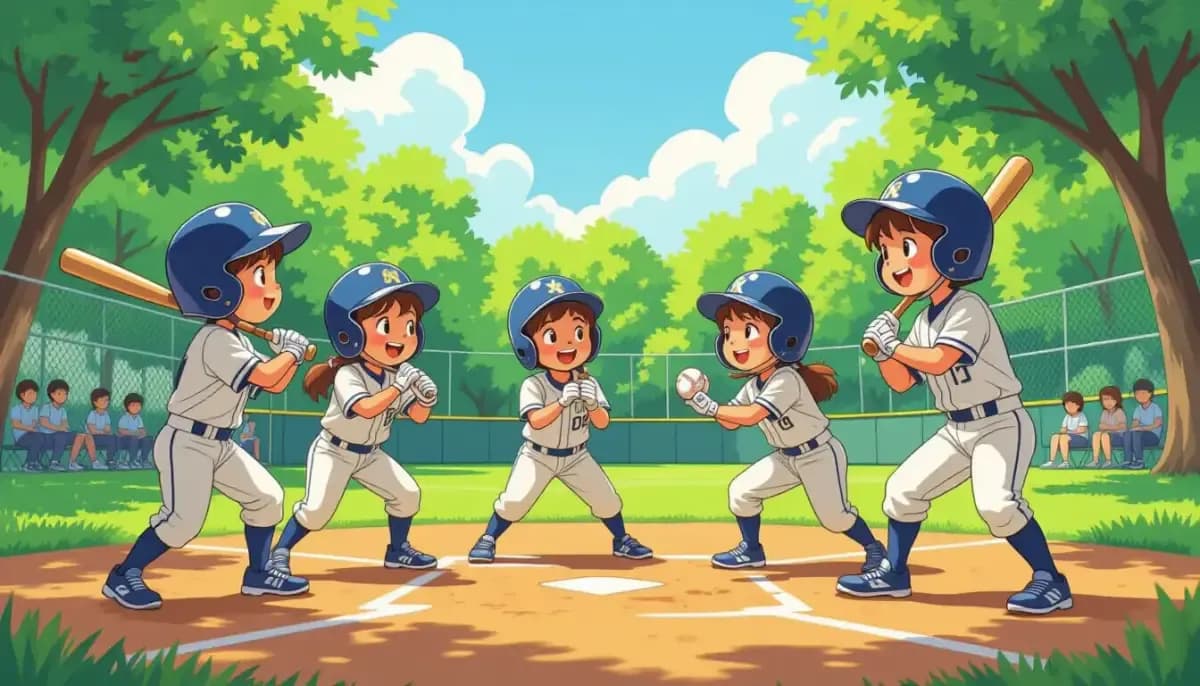
A complete guide to baseball for children in Japan. Learn about youth leagues, how to join a team, what gear to buy, parent duties, and what to expect from training culture as a foreign family.
Baseball for Children in Japan: Getting Started
Baseball is not just a sport in Japan — it is a cultural institution woven into the national identity. From the ancient roots of the Koshien high school tournament to the global rise of stars like Shohei Ohtani, baseball occupies a unique place in Japanese life that goes far beyond simple recreation. For foreign families living in Japan, enrolling a child in baseball can be one of the most rewarding ways to integrate into local community life, make Japanese friends, and experience firsthand the values and discipline that define Japanese culture.
This guide covers everything you need to know about baseball for children in Japan: the league structure, how to find and join a local team, what to expect from practices and parent duties, the equipment your child will need, and how to navigate the cultural nuances that make Japanese youth baseball unique.
A Brief History: Why Baseball Matters So Much in Japan
Baseball was introduced to Japan in 1872 by an American teacher named Horace Wilson, who taught the sport to students at what is now Tokyo University. It spread rapidly through schools and universities during the Meiji era and gained mass popularity following World War II during the American occupation, when it became deeply associated with ideas of discipline, perseverance, and national identity.
Today, Japan has approximately 160 chartered Little Leagues — more per capita than any country outside the United States. The Japan Association of Youth Baseball (大日本少年野球協会) was established in Kobe in 1920, making it one of the oldest youth sports organizations in the world. At the national level, the Summer Koshien high school baseball tournament has been held annually since 1915 at Hanshin Koshien Stadium and attracts over a million spectators each August. When Japanese players compete in the Little League World Series, the entire nation watches: Japan has won 11 LLWS titles, trailing only the United States in all-time championships.
For your child, understanding this cultural backdrop is the first step toward appreciating what joining a Japanese baseball team really means — and what will be expected of them and of your family.
For a broader overview of youth sports in Japan, see our guide on Sports and Physical Activities for Children in Japan.
League Structure: How Youth Baseball Is Organized
Japanese youth baseball is organized into several overlapping systems. The most important to understand are:
| Organization | Age Range | Ball Type | Notes |
|---|---|---|---|
| 少年野球 (Shōnen Yakyū) | Grades 1–6 (ages 6–12) | Nanshiki rubber ball | The most common entry point for children |
| 軟式野球 (Nanshiki) | All elementary/junior high | Rubber ball | Lower injury risk; widely used in schools |
| 硬式野球 (Kōshiki) | Usually from junior high | Traditional hardball | Leads to high school and NPB pathways |
| 女子野球 (Joshi Yakyū) | All ages | Various | Girls are officially permitted in most leagues |
| リトルリーグ (Little League) | Ages 4–16 | Age-appropriate | International structure; 160+ Japan chapters |
Ball types explained: Young children typically begin with nanshiki (rubber) balls, which are the same size as a hardball but softer and less dangerous. This is standard at the elementary school level. Around junior high school, many teams transition to kōshiki (hardball), particularly those aspiring toward competitive high school baseball and eventually Koshien.
Children can begin joining organized teams as early as first grade of elementary school (age 6–7). Most neighborhood shōnen yakyū teams welcome children from Grade 1 onward, though active play often begins in earnest around Grade 3 or 4.
For context on how this fits into Japan's broader school system, read our article on Elementary School in Japan: A Complete Guide for Foreign Parents.
How to Find and Join a Local Team
Finding a local baseball team for your child is easier than it might seem. Here are the most effective approaches:
1. Ask at your child's elementary school. Most public elementary schools in Japan are affiliated with neighborhood baseball teams that practice on school grounds over the weekends. The school office or physical education teachers can point you to the local shōnen yakyū team.
2. Check local parks and playing fields on weekends. Teams typically practice Saturday and Sunday mornings at nearby parks. Simply watching a practice and speaking to coaches or other parents is a completely normal and welcome approach.
3. Look for posters and flyers. Community centers (kominkan), sports clubs, and school bulletin boards routinely post recruitment notices, especially in spring (April, at the start of the Japanese school year).
4. Contact the World Children's Baseball Foundation. The World Children's Baseball Foundation (WCBF) runs introductory baseball classes for children and can help connect foreign families with appropriate teams.
5. International and bilingual options. If language is a barrier, St. Maur International School in Yokohama operates a Kids Baseball Program open to external participants. Little League Japan chapters in international communities often have English-speaking members who can assist with enrollment.
Language and communication: Most local teams conduct practices entirely in Japanese. For children who are still building Japanese language skills, this is often a positive immersion experience, as baseball commands and drills have a shared physical vocabulary that transcends language. If you are concerned, bring a short self-introduction (jikoshoukai) for your child in Japanese — coaches appreciate the effort.
See also our article on Teaching Japanese to Foreign Children: Methods and Resources for strategies that can complement sports participation.
What to Expect from Practices and Training Culture
Japanese youth baseball practices are thorough, structured, and physically demanding by international standards. Understanding what to expect will help you prepare your child mentally and physically.
Practice schedule: Elementary-level teams typically practice two days per week after school, plus all day Saturday and Sunday throughout the school year (September to early July, with a summer camp in August). Junior high school teams often practice every day including holidays, with longer summer sessions running up to eight hours per day.
Structure of practice: A typical session begins with stretching and running, followed by throwing drills, fielding practice, batting practice, and baserunning. Conditioning exercises (squats, push-ups, sprint drills) are standard. Japanese coaches emphasize repetition and perfection of fundamentals over strategy.
Key cultural concepts:
- Wa (和 — harmony): Team cohesion and group harmony are prized above individual achievement. Children are expected to support teammates, avoid drawing undue attention to themselves, and subordinate personal goals to team success.
- Effort over talent: Japanese baseball culture strongly values visible effort. Diving at first base, sprinting on every ball, and hustling between drills signals dedication — this behavior is noticed and rewarded.
- Respect for coaches: Coaches are addressed formally and treated as authority figures. Children bow when speaking to coaches and always respond with a clear "hai!" (yes). This can feel unfamiliar for children from more casual Western sports cultures, but most adapt quickly.
Reform in progress: It is worth noting that Japanese youth baseball is actively undergoing cultural reform. Junior high school enrollment fell from approximately 308,000 students in 2009 to roughly 167,000 in 2019 — a 46% decline driven in part by extreme training schedules, mandatory head-shaving rules, and reports of coach misconduct. Many leagues have begun shifting from single-elimination tournaments to round-robin formats, introducing pitch count limits, and revising coaching standards. The experience your child encounters today is meaningfully different from — and better than — what existed even a decade ago.
For more on extracurricular culture in Japan, including how baseball clubs compare to other after-school activities, see After-School Activities, Juku, and Extracurriculars in Japan.
Parental Involvement: What Families Are Expected to Do
Parent involvement in Japanese youth sports is extensive and structured, and it is important for foreign families to understand this before enrolling a child. Being unprepared for parent duties is one of the most common sources of friction for expat families in Japanese sports communities.
Tōban (当番) system: Most shōnen yakyū teams operate a rotating on-duty schedule for parents. Each family takes turns serving as "baseball parents" on designated weekends. Duties typically include:
- Arriving early to set up equipment and the playing area
- Serving water, tea, and sports drinks to coaches and players throughout practice
- Preparing and serving lunches (including coach lunches)
- Managing ice packs and first aid for minor injuries
- Transporting equipment or children when needed
- Staying until the very end to clean up
Gendered expectations: Research by the Sasakawa Sports Foundation confirms that in practice, these duties fall overwhelmingly on mothers. The informal term "yakyū mama" (baseball mom) reflects how deeply this role is embedded in team culture. For two-income families or single parents, the time commitment can be significant. It is entirely acceptable — and increasingly common — to speak frankly with the team manager about your family's constraints; many teams are adapting to modern realities.
Financial costs: Typical costs for joining a neighborhood shōnen yakyū team include:
- Monthly membership fee: ¥2,000–¥5,000 per month
- Uniform (team jersey, pants, cap, belt): ¥8,000–¥20,000
- Helmet and batting gloves: ¥5,000–¥12,000
- Glove: ¥5,000–¥30,000+ (entry-level to quality)
- Cleats/turf shoes: ¥3,000–¥10,000
- Bat (optional, teams often share): ¥5,000–¥20,000
Budget roughly ¥40,000–¥80,000 for first-year startup costs, with ongoing monthly fees thereafter. Tournament entry fees and travel costs for away games can add up at more competitive levels.
For financial planning context as an expat family in Japan, see Financial Planning for Expat Families Raising Children in Japan.
Equipment Guide: What Your Child Needs
Purchasing the right gear can feel overwhelming, especially if you are new to baseball or navigating Japanese sporting goods stores. Here is a practical guide:
Glove (グラブ / グローブ): The most important and personal piece of equipment. For beginners, a soft leather or synthetic glove in the ¥5,000–¥10,000 range is perfectly suitable. Brands like Zett, Mizuno, and SSK dominate the Japanese market and offer excellent quality. Make sure to buy a nanshiki-compatible glove if your child will be using rubber balls. Breaking in a new glove (グラブの慣らし) is a rite of passage — your child will oil and shape it over several weeks.
Helmet: Required for all batting and baserunning. Japanese safety standards require helmets with ear protection on both sides (double-flap). Price range: ¥4,000–¥12,000. Teams sometimes provide shared helmets at the elementary level.
Cleats vs. turf shoes: Many elementary teams practice on dirt or grass fields and use molded rubber cleats (スパイク). Check with the team about what surface they practice on before buying. Metal spikes are generally not used until high school.
Batting gloves: Optional at the elementary level but increasingly common. ¥1,500–¥5,000.
Bat: Teams often provide shared bats for beginners. If purchasing, look for a bat labeled for nanshiki (軟式) use. Metal bats are standard in Japanese youth baseball (wood bats are used at the professional level). Price range: ¥5,000–¥20,000.
Major sporting goods retailers where you can purchase baseball gear in Japan include Alpen Sports, Xebio, and Himaraya. Online platforms like Amazon Japan, Rakuten, and Yahoo! Shopping have broad selections with next-day delivery in most urban areas.
Koshien Dreams: The Path from Neighborhood Team to National Stage
Understanding the aspirational structure of Japanese baseball helps explain why coaches and parents invest so heavily in youth programs. For most players, the journey looks like this:
- Elementary school (Grades 1–6): Shōnen yakyū teams build fundamentals using nanshiki rubber balls. Tournaments exist but are not the primary focus at this stage.
- Junior high school (Grades 7–9): Players join the school's baseball club (bukatsu). Competition intensifies; regional tournaments lead to prefectural championships.
- High school (Grades 10–12): The true battleground. Approximately 4,000 high schools compete in regional qualifiers for the Summer Koshien. Only 49 teams advance to the national tournament held each August at Hanshin Koshien Stadium in Hyogo. Over one million spectators attend annually.
- College and professional play: Elite high school players are recruited to university baseball programs or directly drafted into Nippon Professional Baseball (NPB).
For foreign children, the realistic and rewarding goal is not Koshien — it is the joy of being part of a team, the lifelong friendships built through shared effort, and the deep cultural immersion that comes from experiencing Japan's national pastime firsthand.
Japan has won the Little League World Series 11 times, third in the world after the United States and Chinese Taipei. The Tokyo Kitasuna Little League holds a remarkable 4 LLWS championships (2001, 2012, 2015, 2017) — the most by any single league in the world. These achievements reflect just how seriously Japan approaches youth development at every level. For more on Japan's Little League baseball history, see the MLB.com coverage of the USA-Japan Little League rivalry.
Practical Tips for Foreign Families
Start young and early. The earlier a child joins a team, the more naturally they will absorb the language, culture, and fundamentals. Children who join in Grades 1–2 often find Japanese peers quickly and build lasting friendships.
Communicate openly with the team manager. Japanese team managers (kantoku or manager-san) are accustomed to parent involvement and appreciate directness about language limitations, scheduling constraints, or cultural questions. A brief, polite explanation in Japanese goes a long way.
Attend as many games as possible. Game days (試合 — shiai) are social events where families bond. Showing up and cheering enthusiastically — even if you do not understand every play — sends a strong message of commitment that teammates and their parents will notice and respect.
Learn the vocabulary. Even a small baseball vocabulary — "play ball" (プレイボール), "good throw" (ナイスボール), "run!" (走れ!), "safe!" (セーフ) — makes practices more enjoyable for your child and impresses coaches. Many Japanese baseball commands borrow directly from English.
Be patient with the pace. Japanese youth baseball develops players slowly and methodically, with heavy emphasis on fundamentals. Batting practice at the elementary level may feel repetitive, but the muscle memory built in these early years pays dividends later.
For comprehensive guidance on navigating community life as a foreign family in Japan, visit Living in Nihon and For Work in Japan for expat community resources and local tips. The Chuukou Benkyou site also offers useful resources for families navigating Japanese educational and extracurricular culture.
For more on raising children within Japanese community structures, read our guides on Making Friends and Developing Social Skills in Japan and Understanding Japanese Parenting Culture as a Foreign Parent.
Conclusion
Baseball in Japan is a uniquely powerful doorway into Japanese culture for foreign children. Joining a local shōnen yakyū team connects your child to a tradition that spans over 150 years, teaches values of discipline, teamwork, and perseverance, and creates social bonds with Japanese peers that school alone rarely provides.
Yes, the time commitment is real. Yes, the parent duties take adjustment. But the experience of watching your child sprint off the field, dirt-streaked and grinning, having just earned their first base hit in front of cheering teammates — that belongs to no culture in particular. That is just sport doing what sport does best.
Japan's baseball future belongs partly to children like yours. Welcome to the team.

Originally from Vietnam, living in Japan for 16+ years. Graduated from Nagoya University, with 11 years of professional experience at Japanese and international companies. Sharing practical information for foreign parents raising children in Japan.
View Profile →Related Articles
Sports Injuries and Safety for Children in Japan
A complete guide for foreign parents on sports injuries, heat illness, abuse in sports, and medical care for children in Japan. Includes bukatsu safety tips and insurance advice.
Read more →
Physical Fitness Testing in Japanese Schools
Everything foreign parents need to know about Japan's annual Shin-tairyoku Test: 8 test items, scoring, results, and tips to help your child prepare for school fitness testing.
Read more →
Team Sports Culture in Japanese Schools
Discover how team sports work in Japanese schools — from bukatsudo clubs and senpai-kohai hierarchy to undokai sports festivals. A complete guide for foreign and expat families in Japan.
Read more →
Track and Field for Kids in Japan
Everything expat families need to know about track and field for kids in Japan — school clubs, private athletics clubs, costs, competitions, and how to enroll your child.
Read more →
Winter Sports for Families: Skiing and Snowboarding in Japan
Complete guide to skiing and snowboarding in Japan with kids. Best family resorts, costs, children's lessons, onsen tips, and how to get there. Niseko, Hakuba, Rusutsu and more.
Read more →
Martial Arts for Kids: Karate, Judo, and Kendo
Complete guide to enrolling your child in karate, judo, or kendo in Japan. Learn about dojo costs, styles, English-friendly options, and what to expect as a foreign family.
Read more →