
How to Choose the Right Kindergarten in Japan

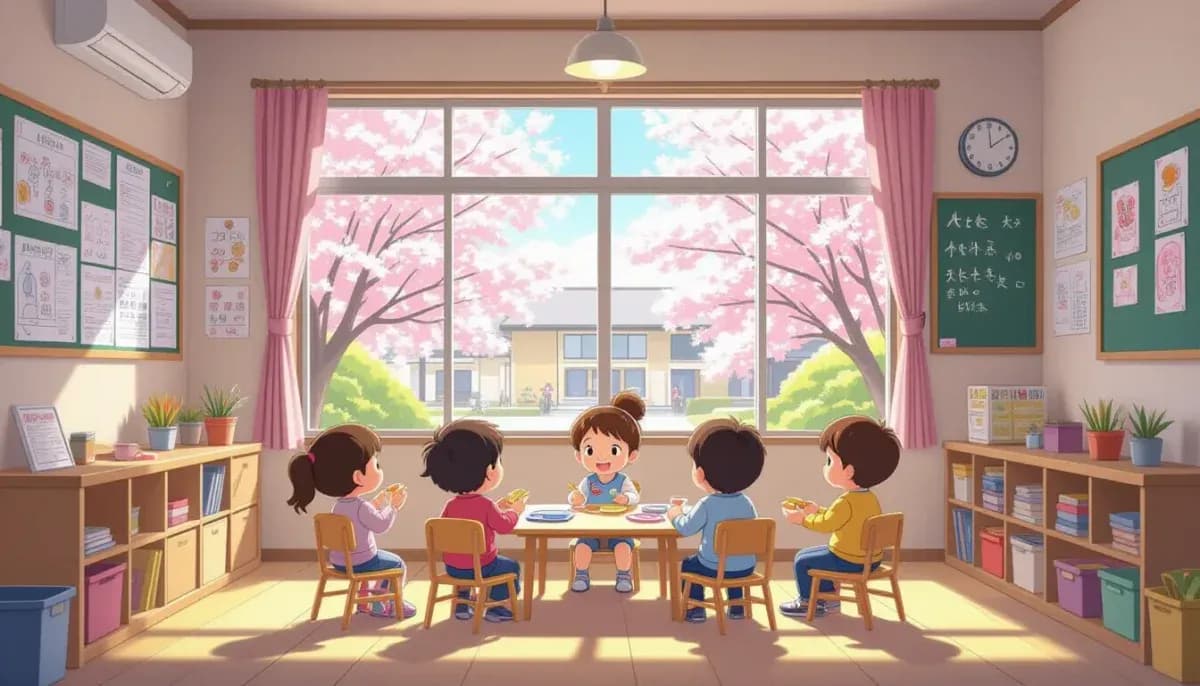
Complete guide to choosing a kindergarten in Japan for foreign families. Compare yochien, hoikuen, and kodomoen, understand costs, application timelines, and tips for expat parents.
How to Choose the Right Kindergarten in Japan
Choosing the right kindergarten for your child in Japan can feel overwhelming, especially as a foreign parent navigating an unfamiliar education system. With multiple types of early childhood facilities, different application processes, and cultural expectations that differ from Western countries, the decision requires careful research and planning. This guide walks you through everything you need to know to find the best fit for your family.
Understanding the Three Types of Early Childhood Facilities in Japan
Japan offers three main categories of early childhood care and education. Understanding the differences is the first step toward making the right choice.
Yochien (幼稚園 - Kindergarten) is an educational institution overseen by the Ministry of Education (MEXT) for children aged 3 to 6. Yochien focuses on preparing children for elementary school through structured learning, social development, and group activities. Standard hours run from about 8:30 AM to 2:00 PM, with approximately 40 days of summer vacation and two-week breaks in winter and spring.
Hoikuen (保育園 - Daycare/Nursery) is a welfare facility managed by the Ministry of Health, Labour and Welfare for children aged 0 to 5. Hoikuen caters primarily to families where both parents work, offering longer hours (typically 7:30 AM to 6:30 PM) with year-round operation. Meals are provided by the facility.
Kodomoen (認定こども園 - Certified Children Centers) is a hybrid model established in 2016 that combines the educational curriculum of yochien with the full-day childcare hours of hoikuen. This option is ideal for families who want both quality education and schedule flexibility.
| Feature | Yochien (幼稚園) | Hoikuen (保育園) | Kodomoen (認定こども園) |
|---|---|---|---|
| Ages | 3–6 years | 0–5 years | 0–6 years |
| Hours | 8:30 AM – 2:00 PM | 7:30 AM – 6:30 PM | Flexible (both options) |
| Focus | Education | Childcare | Education + Childcare |
| Ministry | MEXT (Education) | MHLW (Health/Welfare) | Cabinet Office |
| Working Parents Required | No | Yes | Depends on category |
| Meals Provided | Usually not | Yes | Varies |
| Vacations | School-style breaks | Year-round | Varies by enrollment type |
For a detailed overview of the daycare option, see our complete guide to daycare and hoikuen in Japan.
Key Factors to Consider When Choosing a Kindergarten
Selecting the right facility goes beyond simply picking the nearest one. Here are the most important factors to evaluate.
Location and Commute
Proximity to your home matters more than you might think. Many yochien offer school bus services, but if your child walks or you drive, a shorter commute reduces daily stress. Being close to the kindergarten also helps your child build friendships with neighborhood children, which becomes important when they enter elementary school.
Public vs. Private
Public yochien are run by local municipalities and tend to be low-cost or free. Private yochien offer more diverse programs but charge higher fees, ranging from approximately 100,000 to 300,000 yen per year or more. Some international or bilingual kindergartens operate as unlicensed facilities outside standard government requirements, so verify their credentials carefully.
Educational Philosophy and Focus
Different kindergartens emphasize different areas. Common focuses include:
- Academic preparation — reading, writing hiragana, basic math, and English
- Physical education — outdoor play, sports, and physical endurance
- Social development — manners, cooperation, and emotional intelligence
- Religious education — Buddhist or Catholic kindergartens with values-based curricula
- Language immersion — international preschools offering English or bilingual instruction
Consider which approach aligns with your family's values and your child's personality. If you are raising bilingual children, a kindergarten with English activities may support your language goals.
Class Size and Teacher Ratio
The average Japanese kindergarten classroom has about 24 students, with a student-to-teacher ratio of roughly 16:1. About 94% of kindergarten teachers in Japan are female. Smaller class sizes generally mean more individual attention, so ask about class composition during your visits.
The Application Timeline and Process
The kindergarten application process in Japan follows a strict seasonal calendar. Missing deadlines can mean waiting another full year.
May–September: Research and Tours Start visiting kindergartens during this period. Most facilities offer kengaku (見学) — school tours that you can book year-round. Many also hold pre-kindergarten play groups (プレ幼稚園) starting in summer, which can give your child an advantage during admission.
Late September–Early October: Information Sessions and Applications Kindergartens hold formal information sessions (説明会). Application forms are typically distributed and submitted in early October. For popular private kindergartens, parents may need to line up for hours on submission day.
November: Interviews and Health Checks Both parents are usually expected to attend the interview. Dress formally and conservatively. The kindergarten will also conduct a basic health examination of your child.
December: Acceptance Notifications Acceptance letters arrive with enrollment details and initial payment information.
January–March: Preparations Order uniforms, school supplies, and indoor shoes. Label every single item with your child's name and class number — this is a strict requirement. Set up automatic bank transfers for monthly fees.
For more about planning for education expenses, check out this helpful guide on education fund planning for children in Japan.
Costs and Financial Support
Since October 2019, Japan's free early childhood education policy has made kindergarten significantly more affordable. Here is what you need to know about costs.
Free Education (Ages 3–5): Tuition fees at authorized yochien, hoikuen, and kodomoen are covered by the government for all children aged 3 to 5. This applies regardless of household income or nationality.
Children Under 3: Fees for hoikuen depend on household municipal resident tax. Lower-income families pay less or nothing. Multi-child families receive significant discounts — the second child pays half the standard fee, and the third child attends for free.
Additional Costs Not Covered:
- Uniforms and supplies: 20,000–50,000 yen initially
- School bus fees: 3,000–5,000 yen per month
- Lunch fees (at yochien): 3,000–6,000 yen per month
- Extended care (延長保育): 5,000–10,000 yen per month
- Event and material fees: varies by school
| Cost Category | Approximate Amount |
|---|---|
| Tuition (ages 3–5) | Free (government-subsidized) |
| Uniforms & supplies | ¥20,000–¥50,000 (one-time) |
| School bus | ¥3,000–¥5,000/month |
| Lunch fees | ¥3,000–¥6,000/month |
| Extended care | ¥5,000–¥10,000/month |
| Private kindergarten extras | ¥100,000–¥300,000/year |
For a broader look at family life costs in Japan, visit this complete guide to family life in Japan for foreigners.
Special Considerations for Foreign Families
As a foreign parent, you will face some unique challenges and opportunities when choosing a kindergarten.
Language Barriers
Most Japanese kindergartens operate entirely in Japanese. If you do not speak Japanese fluently, consider:
- Asking if the kindergarten has experience with foreign families
- Whether they provide translated documents or multilingual staff
- Using your local ward office's free translation services for enrollment paperwork
- Enrolling in Japanese language classes yourself to communicate with teachers
Your child will likely pick up Japanese quickly through immersion, which is one of the greatest benefits of attending a local yochien. For strategies on supporting your child's language development, read our guide on teaching Japanese to foreign children.
International and Bilingual Options
If maintaining English (or another language) is a priority, international preschools offer instruction in English but typically cost significantly more — often 1,000,000 to 2,000,000 yen per year or higher. Our guide to international schools in Japan covers these options in detail.
Some Japanese kindergartens now offer partial English programs or hire English-speaking assistants, providing a middle-ground option that combines Japanese education with some English exposure.
Cultural Expectations
Japanese kindergartens place strong emphasis on group harmony, following routines, and developing independence. Less than 5% of class time is devoted to academic instruction — the focus is on social and emotional development, friendship, and responsibility. Children learn to clean their own classrooms, serve lunch to classmates, and resolve conflicts independently.
Understanding these cultural values will help you set appropriate expectations and support your child's adjustment. For more on navigating cultural identity, see our article on cultural identity for hafu and mixed-race children.
How to Visit and Evaluate a Kindergarten
School visits (kengaku) are your most important tool. Here is what to look for and ask during tours.
Observe the Environment:
- Is the facility clean and well-maintained?
- Do children appear happy and engaged?
- Is there adequate outdoor play space?
- Are safety measures visible (gates, soft surfaces, emergency procedures)?
Questions to Ask:
- What is the daily schedule?
- How do you handle children who do not speak Japanese?
- What is the teacher-to-student ratio?
- Are extended care hours available?
- How do you communicate with parents (contact books, apps, meetings)?
- What events and activities happen throughout the year?
Check the Renrakucho System: Most kindergartens use a renrakucho (連絡帳) — a daily communication notebook between parents and teachers. Some modern facilities use smartphone apps instead. This system is essential for staying informed about your child's progress, especially if language is a barrier.
Visit at least three to five kindergartens before making your decision. Having backup options is important since popular facilities fill up quickly.
Preparing Your Child for Kindergarten Life
Once you have chosen a kindergarten, help your child prepare for a smooth transition.
Practice Basic Self-Care Skills: Japanese kindergartens expect children to handle basic tasks independently — changing clothes, using the toilet, eating with chopsticks, and putting on shoes. Start practicing these skills at home well before the first day.
Attend Pre-Kindergarten Programs: Many yochien offer pre-entry play groups for 2-year-olds. These sessions help children get comfortable with the environment, teachers, and other kids before official enrollment.
Prepare Emotionally: Talk to your child about what kindergarten will be like. Read books about school. Visit the playground near the kindergarten on weekends so the area feels familiar.
For earlier stages of child development, our guide on toddler parenting in Japan ages 1 to 3 offers helpful preparation tips.
What Happens After Kindergarten
Kindergarten in Japan sets the foundation for elementary school. The social skills, routines, and independence your child develops will serve them well in the Japanese education system. Many kindergartens have connections with local elementary schools, and attending a well-regarded yochien can positively influence your child's transition.
As your child grows, understanding the path ahead — from elementary through junior high and eventually high school — helps you make long-term educational plans. For families thinking ahead about entrance exams, Chuukou Benkyou offers comprehensive exam preparation resources.
For a broader perspective on all kindergarten and yochien details, the Savvy Tokyo preschool primer and Japan Handbook's expat guide are excellent additional resources.
Final Tips for Making Your Decision
Choosing a kindergarten is one of the first major decisions you will make for your child's education in Japan. Keep these final points in mind:
- Start early — begin researching at least a year before your child turns 3
- Visit multiple facilities — compare at least 3–5 options in person
- Talk to other parents — expat communities and local parent groups offer invaluable firsthand experience
- Trust your instincts — the right fit depends on your specific family situation
- Stay flexible — if your first choice does not work out, your child can still thrive at another excellent facility
Over 90% of five-year-olds in Japan attend some form of early childhood education. Whatever kindergarten you choose, your child will benefit from Japan's strong emphasis on social development, group cooperation, and the joy of learning through play.

Originally from Vietnam, living in Japan for 16+ years. Graduated from Nagoya University, with 11 years of professional experience at Japanese and international companies. Sharing practical information for foreign parents raising children in Japan.
View Profile →Related Articles
Transitioning from Yochien to Elementary School in Japan
A complete guide for foreign parents on transitioning from yochien to elementary school in Japan. Covers enrollment timelines, language support, costs, and what to expect in Grade 1.
Read more →
Religious Kindergartens in Japan: Buddhist and Christian Options
Discover the differences between Buddhist and Christian kindergartens in Japan. Compare teaching philosophies, curriculum approaches, enrollment processes, and tips for foreign families choosing religious preschools.
Read more →
Bilingual and English Kindergartens in Japan
Discover the best bilingual and English kindergartens in Japan for foreign families. Compare costs, enrollment processes, government subsidies, and top school options across Tokyo and beyond.
Read more →
After-School Care Options at Kindergartens in Japan
Comprehensive guide to after-school care options at kindergartens in Japan for foreign parents, covering azukari hoiku, gakudo programs, costs, enrollment, and tips for working families.
Read more →
Yochien Events and Annual Activities Calendar
Complete month-by-month guide to Japanese kindergarten (yochien) annual events and activities. From undokai sports day to happyokai performances, everything foreign parents need to know.
Read more →
Preparing Your Child for Yochien: Readiness Checklist
Complete yochien readiness checklist for foreign families in Japan. Cover self-care skills, Japanese phrases, supplies, enrollment timeline, and daily routine preparation for kindergarten.
Read more →