
Online Gaming Culture and Its Impact on Children

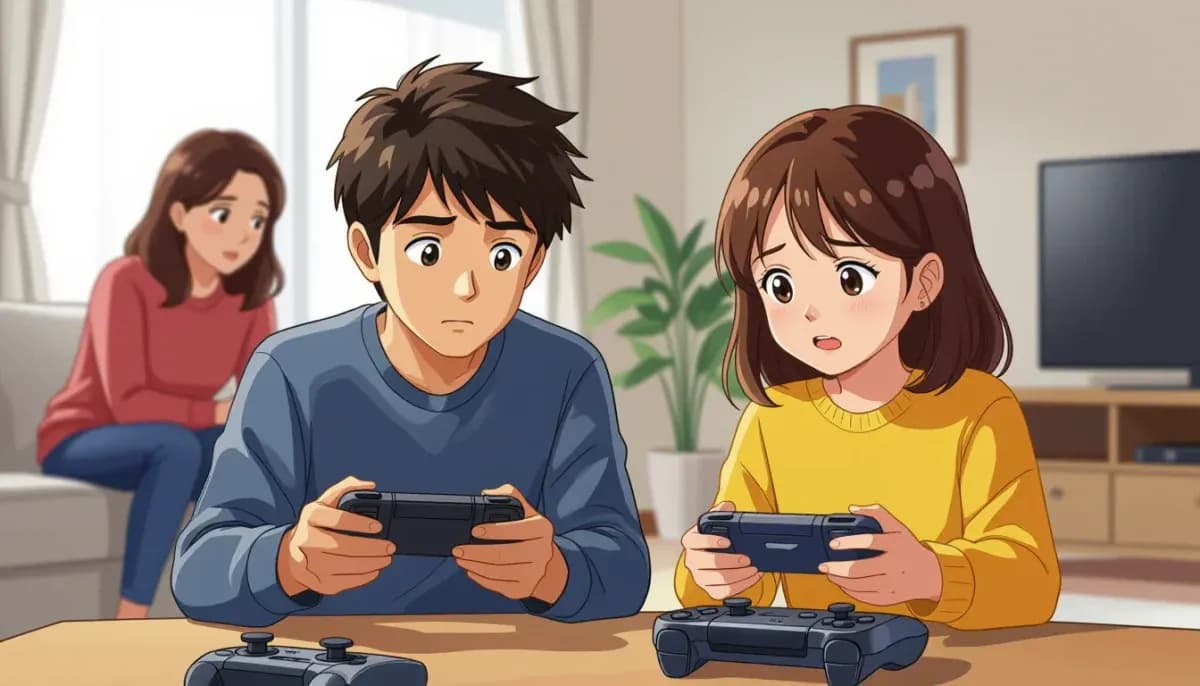
Understand online gaming culture in Japan and its effects on children. Statistics on gaming addiction, in-game purchases, practical tips for foreign parents managing screen time in Japan.
Online Gaming Culture and Its Impact on Children in Japan
Japan is one of the world's premier gaming nations — the birthplace of Nintendo, Sony PlayStation, and iconic franchises like Pokémon, Mario, and Dragon Quest. For foreign parents raising children in Japan, understanding the local gaming culture is essential. Online gaming is deeply embedded in Japanese childhood, and while it brings genuine benefits, it also carries risks that every parent — Japanese and foreign alike — needs to navigate thoughtfully.
This guide covers the realities of online gaming culture in Japan, its documented effects on children's development, and practical strategies for foreign families managing screen time in a society where gaming is a genuine social currency among kids.
The Scale of Gaming Culture in Japan
Japan's gaming industry generated over ¥2 trillion in revenue in 2023, and children are among the most active participants. According to research by the National Hospital Organization Kurihama Medical and Addiction Center, 85% of Japanese youth between ages 10 and 29 had gamed in the past 12 months — with 92.6% of males and 77.4% of females reporting regular play.
Gaming starts young. Roughly half of preschoolers and elementary schoolers have already begun playing online games, and smartphone access is widespread: 30% of elementary school students own their own smartphones, rising to 58.1% among junior high students and 95.9% among senior high students.
The most popular gaming platform is the smartphone (80.7%), followed by home consoles (48.3%) and handheld consoles (33.6%). This means children are gaming constantly — on the way to school, during lunch, and late into the night.
For foreign children joining Japanese schools, gaming quickly becomes a social bridge. Knowing the latest Pokémon GO events, playing Minecraft with classmates, or following the same eSports tournaments creates instant common ground. Parents who dismiss gaming entirely may inadvertently cut their children off from important peer connections.
For a broader picture of raising children in Japanese schools and social environments, see our guide on the Japanese education system for foreign families.
Common Gaming Habits Among Japanese Children
A 2023 survey by Nifty Corporation of 2,355 elementary school children revealed detailed patterns in how Japanese kids game:
| Gaming Duration per Day | % of Elementary Children |
|---|---|
| More than 2 hours | 30% |
| 1–2 hours | 24% |
| 30 minutes to 1 hour | 23% |
| Less than 30 minutes | 15% |
| Do not play | 8% |
Notably, 79% of children preferred solitary gaming — playing alone rather than with friends or family. This trend is important for foreign parents to understand: Japanese children often form social bonds around gaming (discussing games at school) without necessarily gaming together in real time.
Household rules around gaming vary significantly. According to the same survey, 53% of families set time limits on gaming sessions, while 53% have rules prohibiting in-game purchases. However, enforcement is inconsistent, and many children find workarounds through parent accounts or peer pressure.
Popular games among Japanese children include:
- Pokémon GO — still enormously popular, with community day events drawing children outdoors
- Minecraft — popular across age groups for creative and collaborative play
- Fortnite and battle royale titles among middle and high schoolers
- Monster Strike and Puzzle & Dragons — mobile gacha titles with long histories in Japan
- Animal Crossing: New Horizons — popular with younger children and girls in particular
For tips on helping your child build friendships in Japanese schools, see our guide on mental health and emotional wellbeing for foreign children in Japan.
The Benefits of Gaming for Children in Japan
Gaming is not inherently harmful, and research consistently identifies meaningful benefits when children game in balanced ways. For foreign children in Japan specifically, gaming can serve as a powerful cultural integration tool.
Social integration: Many Japanese children bond over shared gaming experiences. A foreign child who knows the current Meta in Pokémon or has completed the same Minecraft server as their classmates gains social credibility rapidly. Gaming gives children a shared language that transcends verbal fluency.
Japanese language development: Many games are only available in Japanese or default to Japanese interfaces. Children who play Japanese-language games often pick up kanji, hiragana, and conversational phrases faster than through formal study alone. For more strategies on this, see our article on teaching Japanese to foreign children.
Cognitive skills: Problem-solving games, strategy games, and puzzle games develop spatial reasoning, executive function, and perseverance. Japanese educational researchers have documented correlations between moderate gaming and improved cognitive flexibility.
Cultural fluency: Understanding references to Dragon Quest, Splatoon, or the regional Pokémon games is part of being culturally literate in Japan. Children who engage with gaming culture develop a nuanced understanding of Japanese popular culture that helps them connect with peers and teachers.
Emotional regulation: For foreign children navigating the social pressures of Japanese school life, gaming can serve as a healthy emotional outlet — a way to decompress after a difficult day without requiring verbal Japanese proficiency.
The key phrase here is balanced. These benefits are real, but they exist on a spectrum with serious risks when gaming becomes excessive or unregulated.
Risks and Warning Signs: Internet Gaming Disorder in Japan
Japan has documented a significant and growing problem with Internet Gaming Disorder (IGD) among children. Research published in the peer-reviewed journal Frontiers in Psychiatry found that 5.6% of Japanese elementary school children meet criteria for pathological gaming — more than 1 in 20 children.
Among junior and senior high school students, 10 to 20% show signs of Internet Gaming Disorder. Overall gaming disorder prevalence across youth populations is approximately 5.1%, with males (7.6%) significantly more affected than females (2.5%). For a detailed clinical review, see the PMC research on Internet Gaming Disorder in Japan.
Japan's Ministry of Health-supported research has identified the following warning signs in children with problematic gaming habits:
- Day/night schedule reversal — staying up all night gaming and sleeping through school
- Withdrawal from offline social activities — canceling plans with friends, dropping sports or hobbies
- Emotional dysregulation — extreme anger, crying, or violence when gaming is restricted
- Declining academic performance — homework neglected, test scores falling
- Appetite disturbance — skipping meals to continue gaming
- Physical symptoms — eye strain, back pain, carpal tunnel-type discomfort
In severe cases documented at Japanese treatment centers, IGD has been associated with school refusal (futōkō), domestic violence directed at parents, and social withdrawal (hikikomori). Japan has established specialized inpatient and outpatient treatment facilities for gaming disorder — a recognition of how serious this problem has become at the national level.
For context on school refusal and its causes in Japan, our guide on junior high school in Japan for foreign families covers the social pressures children face at this critical stage.
Nippon.com's data on gaming addiction among young Japanese people provides an accessible overview of national survey findings for parents who want to understand the broader context.
In-Game Purchases, Gacha, and Financial Risks
One of the most distinctive — and potentially expensive — features of Japanese gaming culture is the gacha system: randomized loot boxes in mobile games that function similarly to slot machines. Many of Japan's most popular mobile games for children (Pokémon Masters, Monster Strike, Granblue Fantasy) rely heavily on gacha mechanics.
Japan's National Consumer Affairs Center issued official warnings in March 2024 following a surge in unauthorized in-game purchases made by minors on parents' accounts. In one documented Tokyo case, a high school student accumulated over ¥1,000,000 in gaming expenses during high school, spending approximately ¥80,000 per month on gacha pulls.
In response to public pressure, major Japanese gaming operators have implemented spending caps: children 15 and under are generally limited to ¥5,000 per month in in-app purchases. However, this requires proactive setup by parents, and children with access to payment methods can often circumvent limits.
Practical financial safeguards for foreign parents:
- Set up child accounts through the App Store or Google Play with explicit spending limits and approval requirements
- Never link primary credit cards to devices children have unsupervised access to
- Enable purchase confirmation requirements (password or biometric) for every transaction
- Regularly review purchase histories on any device your child uses
- Discuss the real-money cost of virtual items directly with children — many children do not connect virtual currency to real yen
For broader guidance on managing finances as a foreign family in Japan, see our article on financial planning for expat families in Japan.
What Japanese Schools and Authorities Are Doing
Japan has begun addressing gaming and internet addiction at the policy level. The 2018 WHO recognition of Gaming Disorder as an ICD-11 diagnosis accelerated government action.
Kagawa Prefecture passed Japan's first ordinance restricting children's game time in 2020 — limiting players under 18 to 60 minutes of gaming per weekday and 90 minutes on holidays. While enforcement mechanisms are limited and the ordinance sparked significant controversy, it signaled growing official concern.
The Ministry of Education has incorporated digital citizenship and healthy technology use into school curricula at the elementary and junior high levels. Many schools hold parent seminars on internet safety and gaming risks.
Hospital-based treatment: Japan's national network of addiction treatment centers has added gaming disorder programs. The Kurihama Medical and Addiction Center in Kanagawa is the leading research and treatment facility. Outpatient counseling is available at most regional hospitals.
School counselors (sukūru kaunserā) are available at most Japanese schools and can be valuable resources if you suspect your child is developing problematic gaming habits. Do not hesitate to request a meeting — this is an expected and respected channel in Japanese schools.
For guidance on navigating healthcare for your children in Japan, see our article on healthcare and medical care for children in Japan.
UNICEF's 2025 report on protecting children in online gaming outlines global recommendations that are increasingly being adopted by Japanese regulators and platform providers.
Practical Strategies for Foreign Parents Managing Gaming in Japan
Foreign parents in Japan face a unique challenge: they want to respect local gaming culture (which serves genuine social functions for their children) while maintaining healthy boundaries that may differ from what their children's Japanese peers experience.
Here are evidence-based strategies that work within the Japanese family context:
Create a family media agreement: Rather than arbitrary bans, negotiate a written agreement with your child that specifies gaming hours, homework-first rules, and purchase permissions. Japanese schools often encourage similar structured approaches to screen time.
Use gaming as a reward, not a default: Make gaming something that happens after obligations are met — homework, chores, outdoor time — rather than the default activity children reach for immediately after school.
Play together occasionally: Understanding what your child is playing helps you assess content appropriateness and provides natural conversation opportunities. Many Japanese parents play alongside their children in shorter sessions.
Monitor without surveillance: Use parental control features on devices and game consoles, but also maintain open conversations about what your child is playing and who they are playing with. Excessive surveillance can damage trust; transparent monitoring with age-appropriate explanations works better.
Stay connected with Japanese school norms: Talk to other parents at school (PTA meetings, school events) about how they handle gaming. Understanding what is normal in your specific school community helps you calibrate expectations.
Watch for social isolation: The most important warning sign is not hours played but whether gaming is replacing — rather than supplementing — offline social connection. A child who games heavily but also has active friendships, attends school reliably, and maintains interests outside gaming is generally lower risk than a child with declining social engagement.
For more on helping your child thrive socially in Japan, see our guide on raising bilingual children in Japan and our overview of cultural identity for hafu and mixed-race children.
Living in Nihon (livinginnihon.com) offers helpful general resources for foreign families adjusting to life in Japan. For Work in Japan (forworkinjapan.com) covers family life considerations for working expats. For academic support resources relevant to your child's age group, Chuukou Benkyou (chuukoubenkyou.com) is a well-regarded Japanese resource covering middle and high school education.
Additional data on Japanese children's gaming habits by age group is available from Nippon.com's elementary school gaming survey.
Conclusion: Gaming Culture as Part of Japanese Childhood
For children growing up in Japan — both Japanese and foreign — gaming is not a fringe activity but a central feature of peer culture. Trying to opt your child out entirely may do more social harm than good, particularly during the critical adjustment period when foreign children are working to build friendships.
The goal for most families is not elimination but calibration: ensuring gaming serves your child's wellbeing, social integration, and development rather than undermining them. Japan's own research community has taken gaming disorder seriously, and the resources — from school counselors to specialized hospital programs — exist to support families who encounter problems.
With clear household rules, open communication, financial safeguards against gacha spending, and attention to warning signs, most children in Japan can enjoy gaming culture in healthy, balanced ways that actually support their integration into Japanese society.
If you are new to Japan and navigating how to set up your family's life here, our comprehensive guide on the Japanese education system for foreign families is the best starting point for understanding the broader context your child is growing up in.

Originally from Vietnam, living in Japan for 16+ years. Graduated from Nagoya University, with 11 years of professional experience at Japanese and international companies. Sharing practical information for foreign parents raising children in Japan.
View Profile →Related Articles
Impact of Technology on Child Development in Japan
A comprehensive guide for foreign parents on screen time, AI use, and digital education in Japan. Backed by Japanese research data and practical parenting tips for expat families.
Read more →
Balancing Digital and Outdoor Activities for Children
Practical guide for expat families on balancing screen time and outdoor play in Japan. Research-backed strategies, Japanese seasonal activities, and school-level tips for raising healthy, balanced children.
Read more →
Coding and Programming Classes for Kids in Japan
Find the best English-friendly coding classes for kids in Japan. Compare Tokyo Coding Club, Little Hackers, Coding Lab Japan, and more — with prices, ages, and enrollment tips for foreign families.
Read more →
Parental Controls and Monitoring Tools Available in Japan
Complete guide to parental controls and monitoring tools for families in Japan. Covers Apple Screen Time, Google Family Link, LINE safety, Japanese regulations, and expert tips for foreign parents raising kids in Japan.
Read more →
Cyberbullying Prevention and Online Safety for Kids
Learn how to protect your child from cyberbullying in Japan. Covers warning signs, laws, English-language resources, and practical online safety rules for foreign families.
Read more →
Digital Literacy Education in Japanese Schools
Complete guide to digital literacy education in Japanese schools for foreign families. Covers GIGA School initiative, mandatory programming, Information I entrance exam, and tips for expat children.
Read more →