
Preparing Children for a Move to Japan

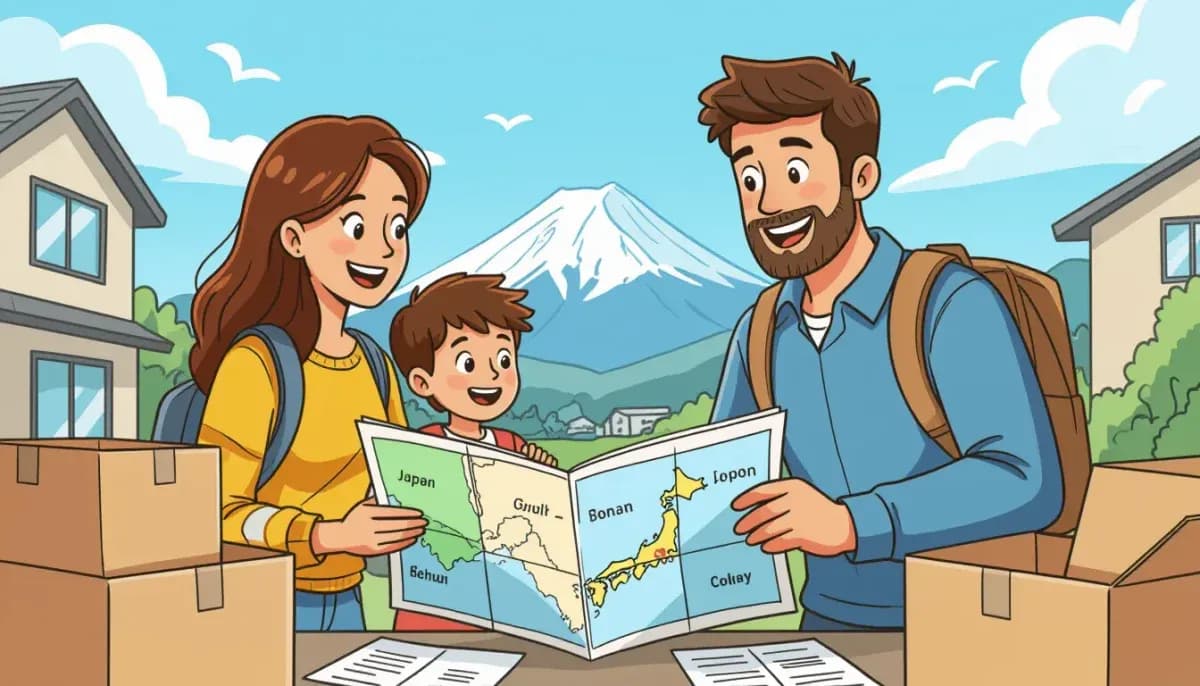
Everything foreign families need to know to prepare children for moving to Japan — from visas and schools to emotional preparation, healthcare, language tips, and building community.
Preparing Children for a Move to Japan: A Complete Family Guide
Moving abroad is one of the most transformative experiences a family can share — and Japan, with its extraordinary safety record, rich culture, and world-class infrastructure, is one of the best destinations in the world to raise children. But the transition comes with real challenges: a different language, an unfamiliar school system, and a culture that operates by rules your children (and you) will need time to learn.
This guide walks you through everything you need to do to prepare your children emotionally, logistically, and practically for a move to Japan — so your family arrives ready, not overwhelmed.
Start Early: Timeline and Visa Requirements for Families
Families who begin planning at least six months before their move date consistently report smoother transitions. The earlier you start, the better your housing options, school placement chances, and visa processing timeline.
Dependent Visa for children: Most work visa categories — including Engineer/Specialist in Humanities/International Services, Investor/Business Manager, Medical, and Journalist visas — allow you to bring unmarried minor children on a Dependent Visa. Your employer or host organization must first apply for a Certificate of Eligibility (COE) on your children's behalf. Once the COE arrives, you apply at your local Japanese consulate. Plan for 4–8 weeks minimum for the COE process.
For deeper guidance on visa categories and the legal framework for families, see our full article on Visa and Legal Issues for Foreign Families with Children in Japan.
What to prepare early:
- Children's birth certificates (with certified translation)
- Passport photos meeting Japanese consulate specifications
- Proof of your employment or sponsorship in Japan
- Medical records and vaccination history
Initial relocation costs for a family can reach approximately $9,700 USD for the first 90 days, covering housing deposits (shikikin and reikin), furnishings, and setup fees. Build this into your financial planning well before departure.
Understanding Japan's School Calendar — It Changes Everything
Japan's school year begins in April and ends in March — the opposite of the September start common in North America, Europe, and Australia. This single fact has major implications for your planning.
A child's grade level in Japan is determined by their age on April 1st of the school year. If you arrive in October, your child may face a six-month wait before the new school year begins — or need to join a class mid-year. Families who can time their arrival for March or early April give their children the best possible start.
For a complete breakdown of dates, exam periods, and seasonal milestones, read our Japanese Academic Year Calendar guide.
| Japanese School Grade | Age on April 1st | Equivalent (US/UK) |
|---|---|---|
| Elementary Year 1 (Shogakko 1-nen) | 6 years old | Grade 1 / Year 2 |
| Elementary Year 6 (Shogakko 6-nen) | 11 years old | Grade 6 / Year 7 |
| Junior High Year 1 (Chugakko 1-nen) | 12 years old | Grade 7 / Year 8 |
| Junior High Year 3 (Chugakko 3-nen) | 14 years old | Grade 9 / Year 10 |
| High School Year 1 (Koko 1-nen) | 15 years old | Grade 10 / Year 11 |
| High School Year 3 (Koko 3-nen) | 17 years old | Grade 12 / Year 13 |
Choosing the Right School: Japanese Public School vs. International School
The most consequential decision for expat families is where to enroll their children. There is no universally right answer — it depends on your family's goals, expected length of stay, and your children's ages and personalities.
Japanese public school (which is free and legally required to accept foreign resident children) offers the fastest route to language acquisition and cultural immersion. Children often achieve conversational Japanese within a year, and the structure of Japanese school life — including lunch preparation, classroom cleaning, and school events — builds remarkable independence and community values. However, the adjustment period is intense. Academic content, social norms, and even basic communication require significant adaptation.
International schools provide continuity with your child's existing curriculum and social world. Well-known options include the American School in Japan (ASIJ), British School in Tokyo (BST), Canadian International School (CIS), and Nishimachi International School. These schools ease re-entry when you eventually repatriate, but fees are substantial — often ¥2,000,000–¥3,000,000+ per year — and they reduce immersion in Japanese life.
For a complete comparison including costs, application processes, and regional options across Japan, see our International Schools in Japan Guide and our Complete Guide to the Japanese Education System for Foreign Families.
Research from the Asian Economic Journal (2023) found that foreign children who do not engage with the local school system face significantly higher risks of social isolation and limited employment prospects as they grow up — underscoring why proactive, early school enrollment matters deeply.
Savvy Tokyo's guide to moving season with kids in Japan offers practical firsthand advice on navigating school enrollment during the busy spring moving season.
Preparing Children Emotionally: Before, During, and After the Move
Research on international relocation consistently shows that children who are actively involved in the moving process experience less anxiety and adapt more quickly. Here is a phased approach:
Before the move:
- Show children photos, videos, and floor plans of the new home and neighborhood
- Explore Japan together through books, anime, cooking Japanese dishes at home, or visiting local Japanese cultural events
- Begin basic Japanese language learning as a family — even 20 minutes a day builds confidence. Apps like Duolingo Japanese, Anki flashcard decks, and YouTube channels (like JapanesePod101) are good starting points
- Have honest, age-appropriate conversations about what will change and what will stay the same
- Identify one or two "anchor" items — a beloved toy, a familiar bedsheet set — that will make the new room feel immediately like home
During packing and moving:
- Let children pack their own belongings and decorate their boxes
- Frame the process as an adventure (not a loss)
- Avoid packing favorite toys without warning; if needed, do it while children are sleeping
- Keep daily routines — mealtimes, bedtimes, storytime — as consistent as possible during the chaotic transition period
After arrival:
- Explore the neighborhood together in the first week — find the nearest park, convenience store (konbini), and playground
- Register at the local ward office (shi/ku/cho/son office) promptly — this activates health insurance, school registration eligibility, and child benefit (jidou teate) payments
- Visit the school before your child's first day if at all possible
For comprehensive guidance on helping children manage cultural transition and mental health, see our article on Mental Health and Emotional Wellbeing for Foreign Children in Japan.
The Tokyo Chapter's personal account of worries before moving to Tokyo is a relatable read for parents anxious about the transition — covering everything from food to loneliness.
Healthcare, Safety, and Daily Life in Japan with Children
Japan's safety record is exceptional. It consistently ranks among the world's top three safest countries. Children can use public transportation independently from remarkably young ages — it is common to see elementary school children commuting solo on trains and buses. Tokyo playgrounds are cleaned and disinfected frequently, and public spaces maintain extremely high hygiene standards.
Children's healthcare is heavily subsidized across Japan. Under the national health insurance system, families pay only 30% of medical costs — and most cities issue children a Medical Care Certificate (iryou-hi josei) that covers the remaining 30% until age 15 (some municipalities extend this to 18). In practice, a doctor's visit costs a maximum of ¥500, and common medicines are free for eligible children.
Key contacts to save immediately upon arrival:
- #8000 — Pediatric nurse consultation hotline (evenings and weekends)
- 119 — Ambulance and fire
- #7119 — Emergency medical consultation (major cities)
Finding an English-speaking pediatrician before you need one is strongly recommended. Ask expat Facebook groups and your company's HR for recommendations in your specific city.
For comprehensive healthcare information, see our guide on Healthcare and Medical Care for Children in Japan.
Childcare costs are manageable for young children: licensed nursery school (hoikuen) became free for children aged 3–5 in October 2019. For families who do not qualify, kindergarten (yochien) fees are capped at ¥25,700 per month under the government subsidy system. Our Complete Guide to Daycare and Hoikuen in Japan covers the enrollment process in detail.
Babysitting is not a cultural norm in Japan the way it is in Western countries. Plan ahead by identifying certified agencies — in Tokyo, Chez Vous, Poppins, and Carefinder are reputable options. Building community networks through Jidokan (community child centers, free and open to all residents) and parent groups is invaluable for both childcare support and making friends.
For expats raising children in Japan, resources like Living in Nihon, For Work in Japan, and Chuukou Benkyou provide practical community knowledge alongside official guidance.
Language: The Biggest Challenge — and How to Get Ahead of It
Every expat family survey puts language at the top of the challenge list. Outside major city centers, English-speaking daycare providers, pediatricians, and public service staff are scarce. Administrative websites — for utilities, ward offices, schools — are often Japanese-only.
What to do before you move:
- Enroll children (and yourselves) in Japanese classes at least 3–6 months before departure
- Focus on practical vocabulary: greetings, school phrases, numbers, food words, and basic directions
- Learn hiragana and katakana — both alphabets can be mastered in 2–4 weeks with daily study, and they are essential for reading menus, signs, and basic forms
After arrival:
- Children typically achieve conversational fluency within 12–18 months of full immersion in a Japanese school environment
- Ask the school about Japanese Language Support classes (JSL) — many public schools in cities with significant foreign populations offer dedicated support
- Maintain your home language actively alongside Japanese — see our guide on Raising Bilingual Children in Japan
The Expat.com child care guide for Japan offers detailed insight into navigating childcare and school systems as a non-Japanese-speaking parent.
For practical strategies on language teaching, visit our article on Teaching Japanese to Foreign Children.
Building Community and Settling In
The families who thrive in Japan are the ones who build community deliberately. Japan's social structures are rich but require proactive engagement to access:
- Jidokan (児童館) — Free community centers for children under 18, with play areas, seasonal events, and parent meetup opportunities. Every neighborhood has one. No registration needed.
- PTA membership — If your child attends a Japanese school, joining the PTA connects you to school communications and parent networks. Our guide to PTA and Parent Involvement in Japanese Schools explains what to expect.
- Expat parent groups — Facebook groups like "Tokyo Foreign Residents" and "Foreigners in Osaka" have tens of thousands of members and are invaluable for practical advice, secondhand goods, and friendship.
- International community organizations — Tokyo American Club, Tokyo Mothers Group, and FCCJ offer organized activities and networking for families.
Financial planning: The average family of four in Japan spends approximately $4,100 USD per month — and Japan's overall cost of living runs roughly 49% lower than the UK or Australia, with healthcare and public transportation significantly cheaper than most Western cities. For detailed financial planning advice, see Financial Planning for Expat Families Raising Children in Japan.
Raising Little Travellers' comprehensive guide on living in Japan with kids is a warm, honest firsthand account that covers social integration, daily life logistics, and what makes Japan extraordinary for families.
What to Pack: A Pre-Move Checklist for Families
Japan has excellent shopping, and most things you need are available — often better quality and more affordable than back home. That said, some items are worth bringing:
- Medications your children use regularly — Bring a generous supply and your doctor's prescription. Some Western medications (including certain ADHD medications and pain relievers containing codeine) are restricted in Japan.
- Children's shoes in larger sizes — Japanese children's shoe sizes tend to run smaller, and options for larger feet are limited in standard stores.
- Familiar comfort items — A favorite toy, blanket, or book can provide enormous stability during the adjustment period.
- English-language children's books — Limited availability outside major cities; stock up before you go.
- Allergy information in Japanese — If your child has food allergies, prepare a written card in Japanese listing their allergens. School lunch (kyushoku) is nutritionally excellent but can be challenging to navigate with severe allergies.
For a comprehensive overview of the relocation process including housing, neighborhood selection, and settling in, visit our pillar guide on Moving To and From Japan with Children: Relocation Guide.
For more practical guidance on expat family life, TokyoDev's article on bringing your family to Japan covers financial and logistical realities for tech workers and their families relocating to Tokyo.
Moving to Japan with children is a decision that will shape your family in profound ways. Japanese children often grow up describing themselves not just by their passport nationality but by the place that formed them — and for children who live in Japan, that place is unforgettable. The preparation you do now makes all the difference in how quickly and confidently your children find their footing in their new home.
Start early, involve your children at every step, and approach each challenge as a shared family adventure. Japan will meet you with safety, kindness, and more wonder than you expect.

Originally from Vietnam, living in Japan for 16+ years. Graduated from Nagoya University, with 11 years of professional experience at Japanese and international companies. Sharing practical information for foreign parents raising children in Japan.
View Profile →Related Articles

Repatriation Planning: Preparing to Leave Japan with Your Family
Complete guide to repatriation planning when leaving Japan with family. Covers tenshutsu todoke, pension withdrawal, school documents, shipping, tax obligations, and emotional preparation.
Read more →
Moving with Teenagers to Japan: Unique Challenges
A complete guide to moving with teenagers to Japan — covering school enrollment, language barriers, social integration, visa rules, and emotional wellbeing for expat families.
Read more →
Documentation and Paperwork for Moving with Children to Japan
Complete guide to all documents needed for moving to Japan with children: dependent visa, COE, birth certificates, post-arrival registration, health insurance, school enrollment, and My Number setup.
Read more →
Settling Into a New Neighborhood with Kids in Japan
A practical guide for expat families settling into a Japanese neighborhood with children — from neighbor introductions and chonaikai to jidokan, schools, and building a support network.
Read more →
Helping Children Maintain Friendships After Moving
Practical strategies for helping expat children maintain friendships after moving to Japan, from video calls and memory albums to building new bonds at school and local community centers.
Read more →
Emotional Support for Children During Relocation
Moving to Japan with kids? Learn how to support your children emotionally during relocation — from pre-move preparation through adjustment, school choice, and mental health resources in Japan.
Read more →