
Books and Resources About Being Hafu for Children

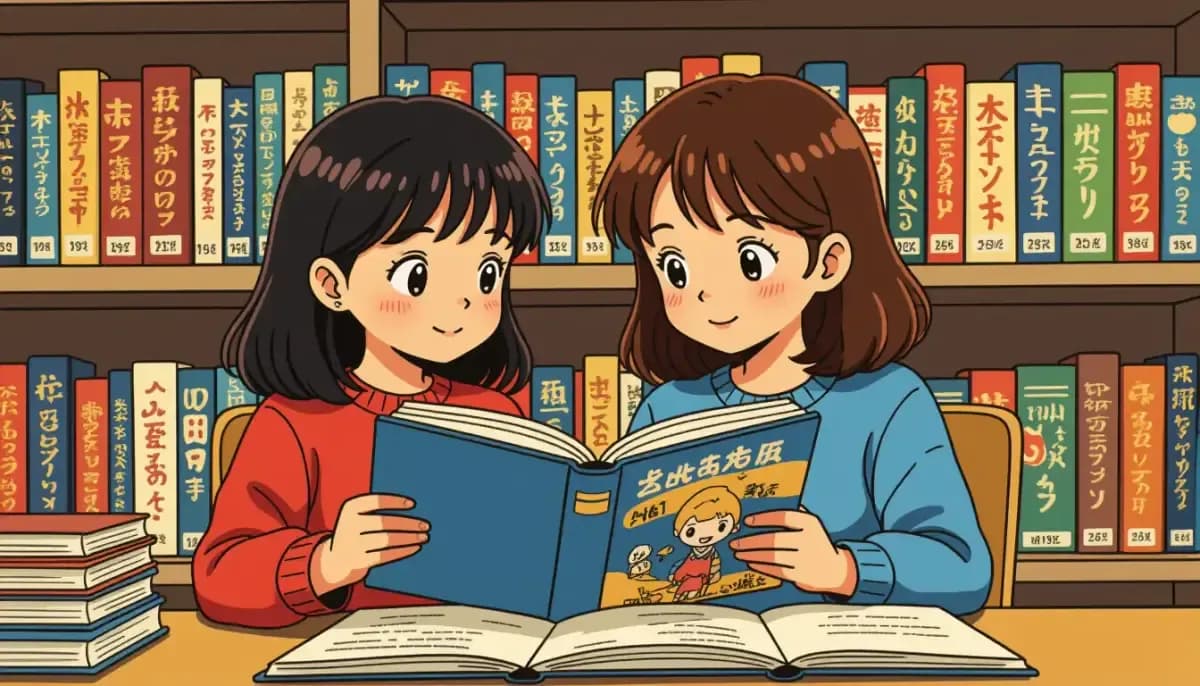
A complete guide to the best books, films, communities, and resources to help hafu (mixed-heritage) children in Japan build a strong, positive identity. Includes recommended picture books, documentaries, and online support groups for parents.
Books and Resources About Being Hafu for Children: A Complete Guide for Parents
Raising a hafu (mixed-heritage) child in Japan comes with a unique set of joys — and challenges. One of the most powerful tools parents have is representation: books, documentaries, community groups, and resources that show hafu children that their identity is something to celebrate, not hide. This guide covers the best books, films, online resources, and communities available to help hafu kids in Japan build a strong, positive sense of self.
Understanding the Hafu Experience in Japan
The word "hafu" (ハーフ) comes from the English word "half" and is widely used in Japan to describe people with one Japanese and one non-Japanese parent. While the term is common, it carries complex emotions. Many hafu individuals and advocates prefer "daburu" (ダブル, meaning "double") to shift the framing from being only half of two cultures to being fully part of two worlds.
The numbers are growing. According to Japan's Ministry of Health, Labour and Welfare, approximately 1 in 49 babies born in Japan today has at least one non-Japanese parent. As of 2023, 15,120 children — about 2.1% of all births — were born to one parent of foreign nationality. While Japan remains one of the world's more homogeneous societies (roughly 98.5% ethnic Japanese as recently as 2018), hafu children are an increasingly visible and vibrant part of the country.
Yet challenges remain. Hafu children — particularly those who look visibly different — can face bullying, microaggressions, and questions about whether they are "really Japanese." Researchers have found that ethnic identity begins forming at age 3 to 5, making early exposure to affirming, multicultural stories and role models especially valuable. The books and resources in this guide are specifically chosen to support that crucial developmental stage and beyond.
For a broader look at identity challenges, see our guide on Cultural Identity for Hafu and Mixed-Race Children in Japan.
Best Books for Hafu Children: Picture Books and Early Readers
Finding children's books that feature mixed-heritage protagonists — especially ones that reflect the Japanese-foreign experience — can require some searching. Here is a curated selection of the most recommended titles.
Picture Books for Young Children (Ages 2–7)
| Book Title | Author | Language | Why It Helps |
|---|---|---|---|
| The Name Jar | Yangsook Choi | English | A Korean-American girl navigating cultural identity in a new school |
| Mixed Me! | Taye Diggs | English | Celebrates mixed-race identity with joy and pride |
| Hana Hashimoto, Sixth Violin | Chieri Uegaki | English | Japanese-Canadian identity and family pride |
| I Am Mixed | Garcelle Beauvais | English | Addresses feeling caught between two worlds |
| Watashi wa Nihon-jin? (Am I Japanese?) | Various | Japanese | Japanese-language picture books exploring multicultural family life |
| Double Happiness | Nancy Tupper Ling | English | Chinese-American but resonates with bicultural families anywhere |
While a dedicated shelf of Japanese-language picture books about hafu specifically remains limited in Japanese publishing, many parents find that bilingual editions of multicultural books serve double duty — building reading skills in both languages while reinforcing the message that mixed identities are normal and beautiful.
Chapter Books and Middle Grade Reads (Ages 8–12)
As hafu children grow older and begin to wrestle more consciously with identity, longer books with more complex storylines can be transformative. Look for:
- Novels featuring Japanese diaspora characters (such as Weedflower by Cynthia Kadohata or Front Desk by Kelly Yang) that explore what it means to belong between cultures
- Books about bilingual kids that validate the experience of being fluent in two languages but "not quite" fitting in either country
- Japanese-language novels with international families — increasingly available through publishers like Poplar and Shogakukan as Japan's multicultural readership grows
Documentary Films and Media Resources
Beyond books, visual media can be enormously affirming for hafu children who want to see people who look like them, think like them, and have navigated the same questions.
Key Documentaries
"Hafu: The Mixed-Race Experience in Japan" (2013) This acclaimed documentary by Megumi Nishikura and Lara Perez Takagi is perhaps the most important single resource for families navigating hafu identity. It follows five mixed-Japanese individuals from diverse backgrounds — white, black, Indian, Korean, and Filipino heritage — over three years. It is available with English and Japanese subtitles and is suitable for older children (12+) to watch with parents.
Hafu2Hafu Photo Book Project Photographer Tetsuro Miyazaki has conducted over 120 interviews with hafu individuals from nearly 100 different countries for this ongoing documentary photography project. The resulting book and online archive is a beautiful, tangible celebration of hafu diversity. Rather than answering questions about identity, each person photographed poses a question to the viewer — an approach that invites reflection rather than defining what hafu "means." Explore the project at Hafu2Hāfu.
Japanese Television and Online Content
NHK World and several Japanese YouTube channels have begun featuring hafu families and multicultural Japan content. Searching "ハーフ 子供" (hafu kodomo) on YouTube surfaces a growing body of vlogs, interviews, and short films by hafu individuals in Japan who share their stories openly — powerful informal resources for older children.
For support on language development alongside these media resources, check our article on Raising Bilingual Children in Japan: Strategies and Methods.
Online Communities and Support Groups for Hafu Families
Books and films are powerful, but so is community. Parents raising hafu children in Japan have built a growing network of support groups — both online and in-person.
Digital Communities
HafuTalk Co-founded in 2018, HafuTalk is an online information and discussion platform where parents of hafu children, mixed-heritage individuals, and educators can connect around themes of diversity, inclusion, and identity. It has become a hub for practical advice on everything from school enrollment to dealing with bullying.
Facebook: Hafu Japanese This Facebook group has over 6,000 members and is one of the most active English-language communities for hafu individuals and their parents. Members share personal experiences, recommend resources, answer practical questions, and provide emotional support. Searching for the group by name on Facebook will bring it up directly.
Multiracial Japan and Similar Facebook Groups Several smaller regional groups exist for hafu families in specific cities (Tokyo, Osaka, Nagoya). These local networks can be especially valuable for arranging in-person meetups and playdates where hafu children can meet others with similar backgrounds.
In-Person Events and Organizations
International schools and multicultural community centers in major Japanese cities occasionally host events specifically for mixed-heritage families. The Japan Foundation and international PTA organizations in cities like Tokyo and Yokohama are good starting points for finding family-friendly multicultural events.
For Japanese middle and high school exam preparation resources that may be relevant for older hafu students, Chuukou Benkyou provides comprehensive study guides. For broader family life guidance, Living in Nihon's Complete Guide to Raising Children in Japan offers an excellent overview of the Japanese education system and social context hafu children will navigate.
Academic and Research Resources for Parents
For parents who want to go deeper — perhaps to better understand what their child is experiencing, or to find evidence-based approaches to supporting bicultural identity — there is a growing body of academic research.
A frequently cited study from the Electronic Journal of Contemporary Japanese Studies by Kavanagh (2013) on "The Raising of Bilingual Haafu Children in Contemporary Japan" found that ethnic identity begins forming at age 3–5 and that children raised bilingually show stronger overall identity development. Crucially, the study found that almost all hafu individuals raised monolingually later wished their parents had made greater efforts to support their second language — a powerful motivator for parents deliberating about language education.
The Wilson Center has hosted exhibitions and talks around the "Hafu: The Mixed-Race Experience" documentary that are available online and provide scholarly context for parents wanting to understand the broader cultural forces at work.
For more on language and identity, our guide on Heritage Language Maintenance for Children in Japan provides practical strategies.
Role Models and Positive Representation
One of the most effective ways to support a hafu child's self-esteem is showing them successful, celebrated people who share their background. Japan has a number of prominent hafu individuals across sports, entertainment, and the arts:
- Naomi Osaka — tennis champion and global icon, with a Japanese mother and Haitian-American father
- Namie Amuro — legendary J-pop singer of mixed heritage
- Kiko Mizuhara — model and actress with Korean-American and Japanese heritage
- Rui Hachimura — NBA player, with a Beninese father and Japanese mother, who has spoken openly about his hafu identity and navigating dual cultural expectations
In 2025, a 14-year-old hafu student's essay titled "Hafu dakara nanda" (ハーフだからなんだ — roughly, "So what if I'm hafu?") won a national human rights prize in Japan. This small but significant moment reflects a generational shift in how young hafu people are claiming and celebrating their identities rather than feeling ashamed of them.
For a family-oriented overview of life in Japan as a foreigner, For Work in Japan's guide to Family Life in Japan also covers the broader support structures available to multicultural families.
How to Talk to Your Hafu Child About Identity
Books and resources are tools. How you use them matters. Here are evidence-based conversation strategies for different ages:
Ages 2–5 (Early Awareness) Read picture books that celebrate diverse families. Use correct, positive language about both cultural heritages. Celebrate both family cultures in daily life — food, music, holidays — so that difference feels normal and joyful rather than unusual.
Ages 6–10 (Social Identity) Children begin comparing themselves to peers at this stage and may come home with questions or distress about comments at school. Validate their feelings. Read chapter books with multicultural protagonists together. Connect with hafu community groups so they have same-age peers who share their experience.
Ages 11–15 (Deep Identity Formation) This is typically the most challenging period for hafu identity. Older children benefit from watching documentaries like "Hafu" with parents present to discuss, reading first-person accounts by hafu adults, and hearing the stories of successful hafu role models. Open, non-judgmental conversations at home are the most powerful resource of all.
For support on the emotional and psychological dimensions of this journey, our article on Mental Health and Emotional Wellbeing for Foreign Children in Japan offers additional guidance.
Quick Reference: Top Resources at a Glance
| Resource Type | Name | Best For |
|---|---|---|
| Documentary | Hafu: The Mixed-Race Experience in Japan | Ages 12+, family viewing |
| Photo Book | Hafu2Hāfu by Tetsuro Miyazaki | All ages, visual celebration of diversity |
| Online Community | HafuTalk | Parents and educators |
| Facebook Group | Hafu Japanese (6,000+ members) | Peer support, practical advice |
| Academic Study | Kavanagh (2013), EJCJS | Parents researching bilingual development |
| Picture Books | Mixed Me!, The Name Jar | Ages 2–7, building identity pride |
| News/Insights | This Is Japan: Hafu Life | General overview for new parents |
| Expat Community Blog | GaijinPot: Growing Up Hafu | First-person perspectives |
Conclusion
Being hafu in Japan is increasingly common, increasingly visible, and — among the younger generation especially — increasingly celebrated. But the path is not always easy. Books, films, communities, and open family conversations are all pieces of the same puzzle: helping a hafu child know, from the earliest age, that their mixed heritage is not a burden to carry but a richness to embrace.
Whether you are just beginning to build a multicultural bookshelf for your toddler or looking for a documentary to watch with your teenager, the resources in this guide are a starting point. Every hafu child's experience is different — shaped by their appearance, their school environment, their languages, and countless other factors. But one thing is consistent across all the research and all the stories: representation matters, and community matters.
Your child is not half of anything. They are double.
For more guides on raising children in Japan as a foreign parent, explore our full resource library on the Japanese education system and kindergarten options in Japan.

Originally from Vietnam, living in Japan for 16+ years. Graduated from Nagoya University, with 11 years of professional experience at Japanese and international companies. Sharing practical information for foreign parents raising children in Japan.
View Profile →Related Articles
Growing Up Bilingual and Bicultural as a Hafu in Japan
A comprehensive guide to raising hafu children in Japan — bilingual development strategies, cultural identity support, school life tips, and community resources for bicultural families.
Read more →
International Community Support for Hafu Families
Find community support for hafu and mixed-heritage families in Japan. Online groups, non-profits, school resources, and cultural events to help bicultural families thrive.
Read more →
Hafu Children's Experiences in Japanese Schools
Discover what hafu (mixed-race) children experience in Japanese schools — from identity challenges and bullying to bilingual expectations and practical tips for parents raising bicultural kids in Japan.
Read more →
How to Talk to Your Children About Race and Ethnicity
A practical guide for foreign parents and expat families in Japan on how to talk to children about race and ethnicity, mixed heritage identity, and building resilience in a multicultural family.
Read more →
Multicultural Identity Development Stages in Children
Understand the 5 stages of multicultural identity development for children raised in Japan. Practical guidance for expat and mixed-heritage families supporting their kids.
Read more →
Nationality Choices for Hafu Children in Japan
A complete guide for international families on nationality choices for hafu children in Japan — dual citizenship rules, the age 20 deadline, the critical 3-month rule for births abroad, and how to support your child's dual identity.
Read more →