
How to Enroll Your Foreign Child in a Japanese School

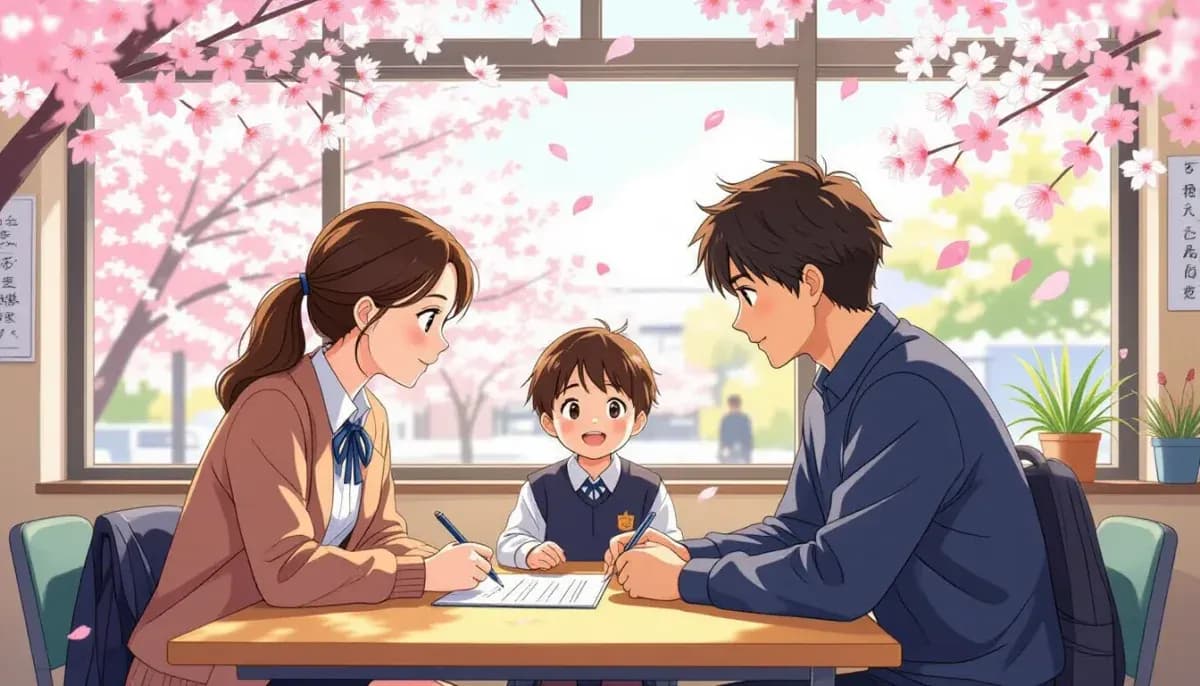
Complete step-by-step guide to enrolling your foreign child in a Japanese public school. Learn about required documents, costs, language support, and tips for a smooth transition.
How to Enroll Your Foreign Child in a Japanese School
Moving to Japan with children is an exciting adventure, but navigating the school enrollment process can feel overwhelming, especially when everything is in Japanese. The good news is that foreign children have the same right to attend Japanese public schools as Japanese citizens, and the process, while detailed, is straightforward once you know the steps. This guide walks you through everything you need to know about enrolling your child in a Japanese school.
Understanding Your School Options in Japan
Before diving into enrollment, it helps to understand what types of schools are available for foreign families in Japan. The main options include Japanese public schools (free tuition), Japanese private schools (paid tuition with entrance exams), and international schools (English or other language instruction, typically expensive).
Japanese public schools are the most popular choice for foreign families who plan to stay long-term and want their children to integrate into Japanese society. With over 114,853 foreign students now enrolled in public schools, representing a 23.3% year-over-year increase, the system is increasingly accustomed to welcoming international students.
For a broader overview of how the education system works, check out our complete guide to the Japanese education system.
Step-by-Step Enrollment Process
Enrolling your child in a Japanese public school follows a clear sequence. Here is the process from start to finish:
Step 1: Obtain a Valid Visa Your child needs a valid residence status in Japan, typically a Dependent visa. Upon arrival, your child will receive a residence card (在留カード / zairyū kādo).
Step 2: Register Your Address Visit your local ward office (区役所 / kuyakusho) or city hall (市役所 / shiyakusho) and submit a Moving-in Notification (転入届 / tennyu todoke). This step is mandatory before you can enroll in any school. For more on visa and residency requirements, see our guide on visa and legal issues for foreign families.
Step 3: Request School Enrollment At the same municipal office, inform the staff that you want to enroll your child in a public school. You will be directed to the Board of Education (教育委員会 / kyōiku iinkai).
Step 4: Complete the Enrollment Application You will receive a Foreign Student Enrollment Application (外国人就学申請書 / gaikokujin shūgaku shinseisho). Important: all documents are in Japanese and must be filled out in Japanese.
Step 5: Receive Your School Assignment Based on your registered address, the Board of Education will assign your child to the nearest public school in your district. You generally cannot choose a different school.
Step 6: Visit the Assigned School Bring the completed enrollment application to the school. Call ahead, as some schools can arrange for a teacher or volunteer who speaks English or your native language.
Required Documents for Enrollment
Preparing the right paperwork is crucial. Here is what you will need:
| Document | Details | Where to Get It |
|---|---|---|
| Residence Card (在留カード) | Valid visa status for your child | Immigration Bureau |
| Moving-in Notification (転入届) | Proof of registered address | Ward/City Office |
| Foreign Student Enrollment Application | Official enrollment form | Board of Education |
| Passport | Child's valid passport | Your home country |
| Previous School Records | Transcripts, report cards | Previous school |
| Immunization Records | Vaccination history | Your home country doctor |
| Mother and Child Health Handbook | 母子手帳, issued at pregnancy | Ward/City Office |
The Ministry of Education (MEXT) provides a Guidebook for Starting School available in English, Chinese, Filipino, Korean, Portuguese, Spanish, and Vietnamese.
Costs of Japanese Public School
One of the biggest advantages of Japanese public schools is that tuition is completely free for elementary and junior high school. However, there are still costs to budget for:
| Expense | Estimated Monthly Cost |
|---|---|
| School Lunch (給食) | ¥4,000 - ¥5,000 |
| PTA Fees | ¥300 - ¥500 |
| Materials & Supplies | ¥500 - ¥1,000 |
| School Excursions | ¥1,000 - ¥3,000 (varies) |
| Sports Uniform | ¥5,000 - ¥10,000 (one-time) |
| Randoseru (School Bag) | ¥30,000 - ¥70,000 (one-time) |
For families with financial difficulties, municipal governments offer school expense subsidies (就学援助 / shūgaku enjo) that cover lunch, supplies, and excursion fees. To learn more about planning for these expenses, read about education fund planning on Living in Nihon.
Essential School Supplies Your Child Will Need
Japanese schools require specific items that may be unfamiliar to foreign families. Here is a checklist:
- Randoseru (ランドセル): The iconic leather school backpack, used throughout elementary school
- Uwabaki (上履き): Indoor shoes worn inside the school building
- Sports Uniform (体操服): Required for PE classes
- Handkerchief and Tissues: Children must carry these daily
- Shitajiki (下敷き): A writing board placed under paper
- Calligraphy Set (書道セット): Required from 3rd grade
- Recorder (リコーダー): For music class
- Swimwear: For summer swimming lessons
- Disaster Prevention Hood (防災頭巾): Emergency head cover kept at school
Children carry their textbooks home every day, so the randoseru needs to be sturdy. Schools do not store materials for students.
Japanese Language Support for Foreign Students
A major concern for foreign parents is whether their child will be able to keep up without knowing Japanese. Currently, 41.5% of foreign students in Japanese public schools require Japanese language instruction and support.
Most schools offer some form of language assistance:
- Japanese as a Second Language (JSL) Classes: Pull-out sessions where students learn Japanese separately
- Bilingual Support Staff: Some schools have staff or volunteers who speak common foreign languages
- Peer Support: Classmates are often assigned as buddies to help new foreign students
- After-School Tutoring: Many municipalities offer free Japanese tutoring for foreign children
The level of support varies significantly by region. Urban areas like Tokyo, Osaka, and Nagoya tend to have more robust programs, while rural areas may have limited resources. For tips on helping your child learn Japanese, see our article on teaching Japanese to foreign children.
If you are also studying Japanese yourself, check out JLPT exam preparation tips at For Work in Japan to study alongside your child.
Grade Placement and Academic Year
The Japanese school year begins in April and is divided into three terms:
- First Term: April to late July
- Second Term: September to late December
- Third Term: January to late March
Grade placement is determined by birth date, not academic ability. Children born between April 2 of one year and April 1 of the following year are placed in the same grade. This means your child may be placed in a different grade than they were in their home country.
Mid-year transfers are possible and fairly common. If you move to Japan outside of April, your child can still enroll and join their assigned grade immediately.
For detailed information about what to expect at each school level, explore our guides for elementary school, junior high school, and high school.
Special Considerations for High School Enrollment
Unlike elementary and junior high school, high school in Japan is not compulsory and requires an entrance exam. Foreign students face additional challenges:
- Students must have completed 9 years of education equivalent to Japanese schooling
- Some prefectures offer special entrance exam tracks for foreign students, with 12 schools in Saitama offering special selection exams
- Exams may allow choice between Japanese and English
- Part-time (定時制) and correspondence (通信制) high schools are also options
For returnee students and foreign children navigating the exam system, Chuukou Benkyou has detailed information on the exam system for foreign students.
Tips for a Smooth Transition
Starting at a new school in a foreign country is a big adjustment. Here are practical tips from experienced expat families:
- Visit the school before the first day: Ask for a tour and meet the homeroom teacher
- Label everything: All belongings should be labeled with your child's name in katakana
- Join the PTA: Despite the language barrier, PTA participation helps you stay informed and build connections
- Prepare for bento days: Some schools have days without lunch service where you need to pack a bento
- Learn school communication: Most notices come as printed papers (おたより / otayori) in Japanese; consider using a translation app
- Connect with other foreign parents: Local international associations often have parent groups
- Be patient with adjustment: Most children adapt within 3-6 months, even with limited Japanese
For guidance on raising children across two cultures, our article on cultural identity for mixed-race children offers valuable perspectives.
Dealing with Challenges and Getting Help
Approximately 20,000 foreign children in Japan are either not enrolled in school or have unconfirmed enrollment status. To avoid your child falling through the cracks:
- Always register with your local Board of Education, even if enrollment is delayed
- Contact your nearest International Association for multilingual support
- Reach out to MEXT's multilingual school enrollment hotline
- Consider hiring a bilingual education consultant for complex situations
If your child is struggling emotionally with the transition, our guide on mental health and emotional wellbeing for foreign children provides helpful resources.
Conclusion
Enrolling your foreign child in a Japanese school is entirely achievable with the right preparation. The process starts with registering your address, obtaining the enrollment application from the Board of Education, and visiting your assigned school. While the paperwork is in Japanese and the system has its unique requirements, the reward is a high-quality, tuition-free education and the opportunity for your child to become truly bilingual and bicultural.
Start the process early, gather your documents, and do not hesitate to ask for help at your local ward office. Japan's public school system is increasingly welcoming to foreign families, and your child can thrive in this enriching educational environment.

Originally from Vietnam, living in Japan for 16+ years. Graduated from Nagoya University, with 11 years of professional experience at Japanese and international companies. Sharing practical information for foreign parents raising children in Japan.
View Profile →Related Articles
Recent Japanese Education Reforms That Affect Foreign Children
Comprehensive guide to recent Japanese education reforms that affect foreign children, including free high school tuition, GIGA School program, JSL support expansion, and special exam pathways for expat families.
Read more →
How to Transfer Schools in Japan as a Foreign Family
Complete guide to transferring schools in Japan for foreign families. Learn the required documents, step-by-step process, best timing, and tips for a smooth school transition in Japan.
Read more →
School Fees and Education Costs in Japan Breakdown
Complete breakdown of education costs in Japan for foreign families. Compare public, private, and international school fees from kindergarten through high school with real cost data.
Read more →
Understanding Japanese Report Cards and Academic Evaluation
Understand Japanese report cards (tsushinbo), grading scales, evaluation criteria, and naishoten scores. A complete guide for foreign parents navigating academic assessment in Japanese schools.
Read more →
Homework and Study Habits in Japan: What to Expect
A complete guide to homework and study habits in Japanese schools for foreign families. Learn about daily homework amounts, summer assignments, juku cram schools, and tips for supporting your child.
Read more →
Japanese Classroom Culture and Etiquette Your Child Should Know
A complete guide to Japanese classroom culture and etiquette for foreign families. Learn about bowing rituals, school cleaning duties, lunch customs, dress codes, and how to prepare your child for school in Japan.
Read more →