
Preparing for High School Entrance Exams in Japan

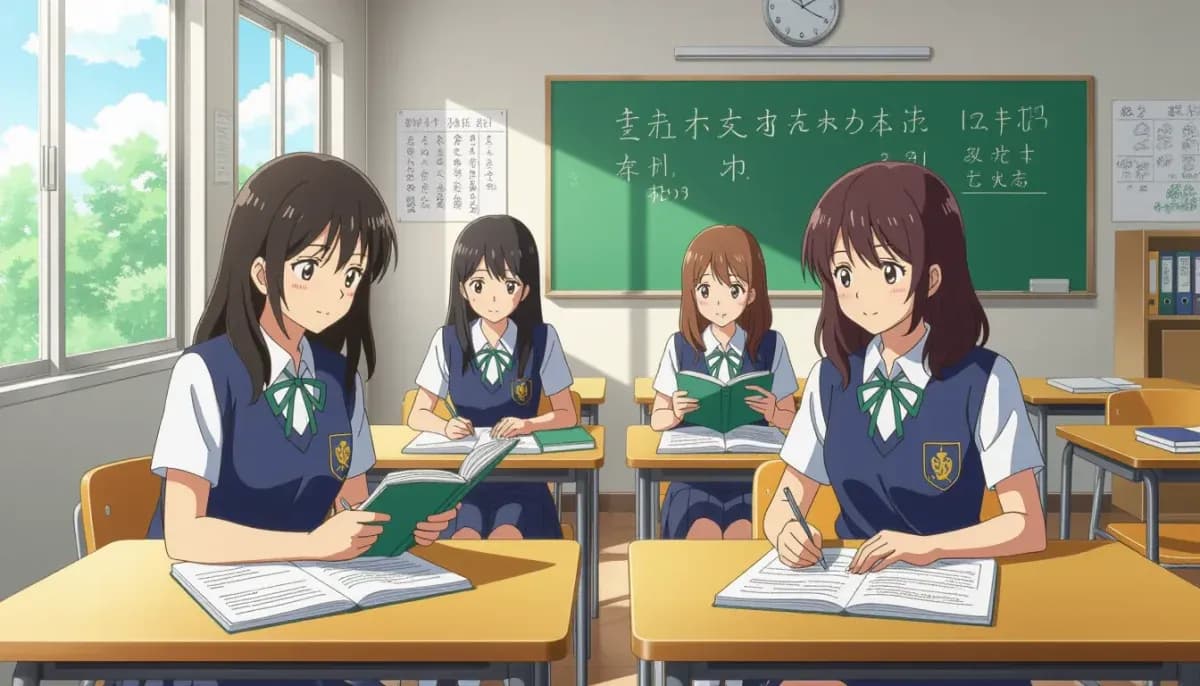
Complete guide for foreign families preparing for Japanese high school entrance exams (koukounyuushi). Covers special provisions for foreign students, naishinsho, juku, study strategies, and exam timeline.
Preparing for High School Entrance Exams in Japan: A Complete Guide for Foreign Families
If you have a child in junior high school in Japan, the high school entrance exam — known as koukounyuushi (高校入試) — is likely already on your radar. With approximately 97.3% of Japanese middle school graduates going on to high school, this is a near-universal milestone in the Japanese education system. For foreign families, navigating the process can feel overwhelming, but with the right preparation and understanding of the system, your child can succeed.
This guide covers everything you need to know about preparing for high school entrance exams in Japan, including special provisions available to foreign students, study strategies, juku (cram school) options, and a realistic timeline for success.
Understanding the Japanese High School Entrance Exam System
Japan's high school entrance exam system differs significantly from many Western countries. There is no single national exam — instead, each prefecture manages its own process, and each high school sets its own criteria. This means your child's options and the exam format will vary depending on where you live.
There are two main pathways to high school admission:
1. Recommendation Exams (推薦入試, Suisen Nyushi) These are held from early January to early February. Rather than relying solely on written test scores, recommendation exams evaluate students on their internal assessment scores (naishinsho), an essay, and an interview. Students who perform consistently well throughout junior high school and want to secure a place early often pursue this route.
2. General Exams (一般入試, Ippan Nyushi) These are held from February to early March and are the main pathway for most students. Admission is based on written test scores combined with the internal assessment report. For public high schools, exams typically cover five subjects: Japanese, Mathematics, English, Science, and Social Studies. For most private high schools, only three subjects are tested (usually Japanese, Math, and English).
Understanding which pathway suits your child — and which schools are realistic targets — requires careful planning starting from the first year of junior high school.
For a broader understanding of Japan's school structure, see our guide on Junior High School in Japan and High School Options for Foreign Families.
The Naishinsho: Why Internal Assessment Scores Matter
One of the most important concepts in the Japanese entrance exam system is the naishinsho (内申書), or internal assessment report. This document, prepared by the junior high school, summarizes a student's academic performance, attendance, extracurricular involvement, and classroom behavior throughout their three years.
In Tokyo public high schools, the ratio between written exam scores and the naishinsho is typically 7:3 — meaning the written test carries 70% of the weight, while school records account for 30%. However, this ratio varies by prefecture and school type.
The naishinsho is scored across 9 subjects on a scale of 1 to 5 each, giving a maximum of 45 points. Some prefectures weight the Grade 3 (final year) naishinsho more heavily. This means:
- Grades in all subjects matter from Day 1 of junior high
- Attendance is tracked and poor attendance can negatively affect the report
- Participation in school events, club activities, and classroom attitude all contribute
- Even subjects like music, art, physical education, and home economics count
For foreign families, this is particularly important. Your child's naishinsho begins accumulating from their first term in junior high school. Encourage consistent effort across all subjects from the very beginning.
Special Provisions for Foreign Students
Japan's education system recognizes that students who recently moved from abroad face unique challenges. If your child has lived in Japan for fewer than seven consecutive school years, they may qualify for special entrance exam provisions known as Kikoku Seitotou Tokubetsu Sochi (帰国生徒等特別措置).
These special measures typically include:
- Furigana (reading aids) added to kanji in exam questions
- Permission to use a Japanese-English dictionary during the exam
- Extended exam time to accommodate language processing
- Reduced subject requirements — some regions allow students to choose three out of five subjects
- Dedicated exam tracks — Tokyo, for example, holds special entrance exams for foreign students, with three high schools offering special Japanese language support classes
To qualify, your child will need documentation proving their residency history, such as a Certificate of Residence (jūminhyō) or alien registration certificate. It is important to begin gathering this documentation well in advance, as applications typically require these materials by February.
Contact your child's junior high school homeroom teacher or the guidance counselor (shingaku tantou) early in Grade 3 to confirm which special measures apply in your prefecture.
For information about navigating Japan's education system as a foreign family more broadly, the Information on High School Entrance Examinations published by Tokyo's education support network is an excellent resource.
Exam Preparation Timeline: A Year-by-Year Approach
Preparing for high school entrance exams is not something that happens overnight. Success requires a structured, long-term approach beginning from the first year of junior high school.
| Phase | Period | Weekly Study Hours | Key Focus Areas |
|---|---|---|---|
| Grade 1 Foundation | April – March | 10–15 hours | Build study habits; maintain naishinsho scores |
| Grade 2 Acceleration | April – March | 15–20 hours | Deepen subject knowledge; start targeting schools |
| Grade 3 Spring/Summer | April – August | 20–30 hours | Comprehensive review; identify weak subjects |
| Grade 3 Summer Intensive | July – August | 35–56 hours | Past exam practice; intensive subject review |
| Grade 3 Autumn | September – December | 25–35 hours | Application problems; mock exams |
| Grade 3 Final Stretch | January – Exam Day | 35–45 hours | Fine-tuning; mental preparation |
The summer before Grade 3 is widely regarded as the make-or-break period. Many students spend the entire summer break at juku (cram schools) or in self-directed intensive study. This is when the foundation built in earlier grades either pays off — or reveals gaps that need urgent attention.
For more guidance on supporting your child's academic journey, see our Complete Guide to the Japanese Education System for Foreign Families.
Juku (Cram Schools): Are They Necessary?
Juku (塾), or cram schools, are a central feature of Japanese exam preparation culture. While attending juku is not mandatory, the vast majority of students preparing for competitive high school entrance exams enroll in at least one.
Annual juku costs typically range from 100,000 to 400,000 yen per year, with costs rising significantly for students targeting top-tier schools or taking multiple subject courses.
Juku offer several advantages:
- Structured curriculum aligned with exam content
- Regular mock exams that simulate real test conditions
- Personalized feedback on weak areas
- Peer motivation — studying alongside similarly motivated students
- Access to past exam papers from multiple schools and prefectures
For foreign children, finding a juku that understands their unique needs is important. Some juku in major cities cater specifically to returnee students (kikokushijo) and foreign students. Ask your child's school counselor for recommendations, or look for juku that offer extra Japanese language support.
It's worth budgeting for juku costs as part of your overall education planning. For guidance on education costs in Japan, Living in Nihon has a detailed education fund planning guide covering costs from kindergarten through university.
Choosing the Right High School
Not all high schools are equal, and the right fit depends on your child's academic level, interests, and future goals. In Japan, high schools generally fall into several categories:
Public High Schools (公立高校) Tuition is subsidized and affordable. Entry is highly competitive for top schools. Exam content is standardized within the prefecture.
Private High Schools (私立高校) More diverse in curriculum and culture. Some focus on university preparation; others on vocational training. Exams are school-specific and often have flexible intake windows.
International High Schools (インターナショナルスクール) Teach in English or another language. Ideal for students planning to study abroad. Not part of the Japanese exam system — check separately for admissions requirements.
Vocational High Schools (専門高校) Focus on specific trades or technical skills. A valid and respected pathway for students with clear practical interests.
Special Support Schools (特別支援学校) For students with disabilities requiring specialized educational environments.
For foreign families, it's worth exploring whether an international school or a bilingual program might better serve your child's long-term goals. Our guide on International Schools in Japan covers this in detail.
For Work in Japan also provides useful context on how educational pathways connect to career options for foreigners in Japan at forworkinjapan.com.
Practical Study Strategies for Exam Success
Whether your child attends juku or studies independently, certain strategies consistently improve exam results:
1. Master the Basics First Japanese entrance exams test foundational knowledge deeply rather than breadth. Ensure your child has a solid grasp of core concepts in all five subjects before moving to advanced material.
2. Practice with Past Exams (過去問, Kakomon) Past exam papers are the single most effective study tool. They reveal exam patterns, timing, and the specific style of questions used by target schools. Begin using kakomon at least 6 months before the exam.
3. Build Consistent Daily Study Habits Rather than irregular marathon study sessions, consistent daily study — even 60-90 minutes on school days — builds stronger retention. Establish a dedicated study time and space.
4. Focus on Weak Areas Systematically Use mock exam results to identify specific weak points. Targeted remediation of weak areas yields faster score improvement than reviewing material the student already knows.
5. Prioritize Sleep and Health Exam performance suffers significantly with sleep deprivation. In the final weeks before the exam, maintaining a consistent sleep schedule and healthy diet is as important as study time.
6. Support Japanese Language Development For students still developing Japanese proficiency, dedicated Japanese language study is essential. Consider both academic Japanese (for exam reading comprehension) and everyday communication skills. Our guide on Teaching Japanese to Foreign Children offers practical approaches.
Chuukoubenkyou.com provides an in-depth complete guide to high school entrance exams in Japan with subject-specific preparation strategies worth consulting alongside your juku curriculum.
Supporting Your Child Through Exam Season
The months leading up to high school entrance exams are stressful for the entire family. Here are ways foreign parents can actively support their child:
- Stay informed about exam dates, application deadlines, and required documents — these vary by school and prefecture
- Communicate with teachers regularly; the homeroom teacher (tantou sensei) is a key resource for guidance and naishinsho context
- Normalize the pressure — acknowledge that exam stress is real while reminding your child that one exam does not define their future
- Prepare practically — arrange a quiet study environment, healthy meals during intensive study periods, and transportation logistics for exam days
- Explore all options — if the first choice school doesn't work out, have a backup plan ready; many students find unexpected success at their second-choice school
The social and emotional dimensions of this period are just as important as academic preparation. For guidance on supporting your child's emotional wellbeing during high-pressure periods, see our article on Mental Health and Emotional Wellbeing for Foreign Children in Japan.
Conclusion
Preparing for high school entrance exams in Japan is a multi-year process that requires consistent effort, strategic planning, and family support. For foreign families, the additional challenges of language barriers and unfamiliar systems can feel daunting — but Japan's special provisions for foreign students and the wide availability of support resources make success achievable.
Start early, understand the naishinsho system, make use of special exam accommodations if eligible, and choose study strategies that fit your child's learning style. With the right preparation, your child can not only survive Japan's high school entrance exam season — they can thrive.
For broader guidance on raising and educating children in Japan as a foreign family, explore our complete education resource library.
External resources:
- High School Entrance Exam Information (Tokyo) — official guidance for foreign students
- TIPS Tokyo Multicultural Support Center — multilingual support for foreign families
- Education Fund Planning in Japan — comprehensive cost breakdown

Originally from Vietnam, living in Japan for 16+ years. Graduated from Nagoya University, with 11 years of professional experience at Japanese and international companies. Sharing practical information for foreign parents raising children in Japan.
View Profile →Related Articles

Part-Time Rules and Responsibilities for Junior High Students
Can junior high school students work part-time in Japan? Learn the legal restrictions, school regulations, and what foreign families need to know about teen employment rules in Japan.
Read more →
Student Council and Leadership in Japanese Junior High
A complete guide to student council (seitokai) in Japanese junior high schools — how elections work, leadership roles, responsibilities, and how foreign children can participate in school governance.
Read more →
Technology and Computer Education in Junior High Japan
Discover how technology and computer education works in Japanese junior high schools. Learn about Gijutsu Katei, the GIGA School Program, mandatory programming, and what foreign families can expect.
Read more →
English Education in Japanese Junior High Schools
Comprehensive guide to English education in Japanese junior high schools: curriculum, ALT teachers, proficiency data, tips for foreign families, and entrance exam preparation advice.
Read more →
Private Junior High School Entrance Exams in Japan
Everything foreign families need to know about private junior high school entrance exams in Japan: subjects, competition ratios, returnee pathways, costs, and how to prepare.
Read more →
Career Guidance and Course Selection in Japanese Junior High
A complete guide to career guidance (shinro shidou) and high school course selection in Japanese junior high schools for foreign families — covering entrance exams, juku, and special admissions for international students.
Read more →