
Screen Time Guidelines for Children in Japan

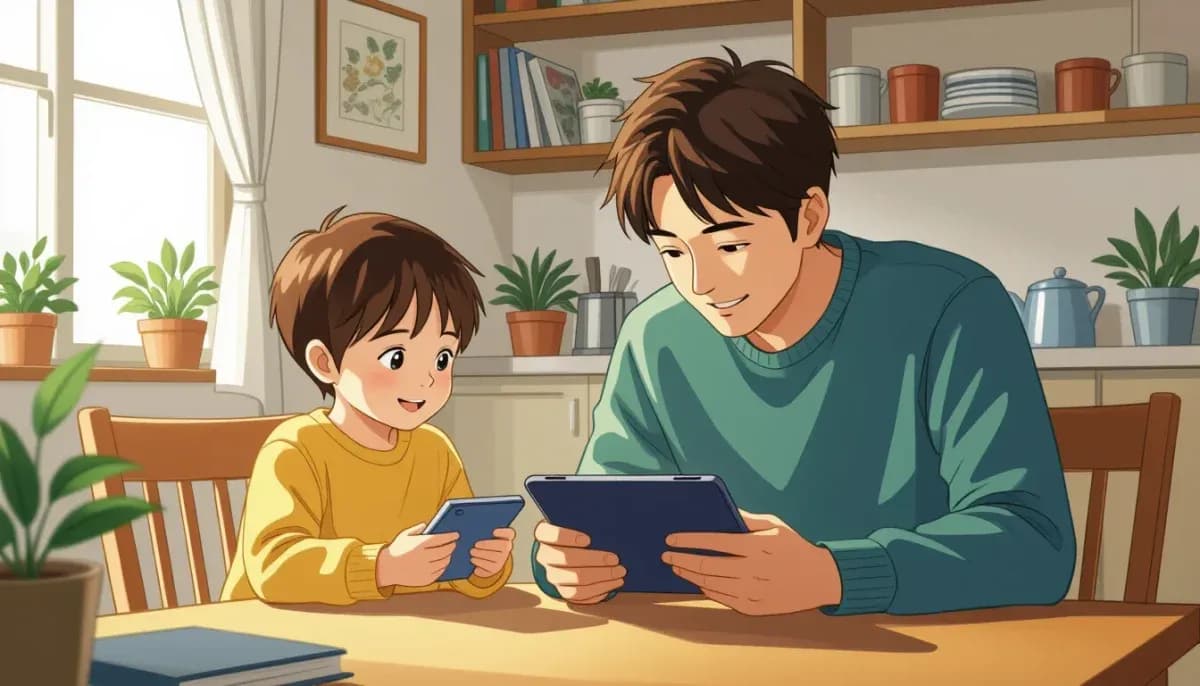
Comprehensive guide to screen time guidelines for children in Japan — WHO recommendations, Toyoake City's 2025 ordinance, latest research data, and practical strategies for expat families raising kids in Japan.
Screen Time Guidelines for Children in Japan: A Complete Guide for Expat Families
As a foreign parent raising children in Japan, navigating screen time can feel overwhelming — especially when Japanese schools are rolling out tablets under the national GIGA School Initiative while researchers warn that over half of Japanese 3-year-olds already exceed recommended limits. This guide breaks down the official guidelines, the latest research, and practical strategies to help your family strike a healthy balance.
Understanding Screen Time Guidelines in Japan
Japan follows international health organization recommendations while also developing its own national and local policies. Here is what you need to know:
WHO Guidelines (internationally recognized in Japan):
- Children under 2 years: Avoid screen time entirely (video calls with family members are the exception)
- Children aged 2–5 years: No more than 1 hour per day of high-quality programming
- Children aged 6 and older: Consistent limits on time spent, with focus on adequate sleep, physical activity, and social interaction
Japan-Specific Policies:
Japan has been increasingly active in legislating screen time. Kagawa Prefecture became the first in Japan to pass a prefecture-level law restricting children's screen time. More recently, Toyoake City in Aichi Prefecture made national headlines in October 2025 by passing Japan's first municipal screen time ordinance. The ordinance recommends a maximum of 2 hours of leisure screen time per day and sets device curfews — screens off by 9 p.m. for children ages 6–12 and by 10 p.m. for older students. While voluntary (no fines or enforcement), it reflects a growing nationwide conversation about digital wellbeing.
Learn more about navigating family life in Japan as a foreigner for broader context on raising kids in Japan.
The Data: How Much Screen Time Are Japanese Children Actually Getting?
The statistics paint a concerning picture that many expat parents may find surprising:
| Age Group | % Exceeding Recommended Screen Time | Data Source |
|---|---|---|
| 3 years old | 57% exceed WHO guidelines | Acta Paediatrica, 2025 |
| Ages 1–3 (TV/DVD 2+ hrs/day) | 26–30% | Japan Environment and Children's Study (n=57,980) |
| Elementary school (2+ hrs/day) | 38.8% on weekdays | Super Shokuiku School Project |
| Elementary school (3+ hrs/day) | 29.9% (boys 34.9%, girls 24.8%) | PMC multilevel analysis, 110 schools |
A landmark study published in *JAMA Pediatrics* (2023) followed nearly 58,000 Japanese children from birth to age 3. The findings were significant: increased TV/DVD screen time at ages 1–2 was associated with lower developmental scores at ages 2–3, particularly in:
- Communication skills (strongest effect at ages 1–2)
- Gross motor development
- Fine motor skills
- Personal-social development
Importantly, the research also found a bidirectional effect — children with lower communication scores at age 2 tended to watch more screens at age 3, creating a potential cycle that parents should be aware of.
For context on Japanese schooling and the role ICT now plays in education, see this guide on the GIGA School Initiative and its relationship to entrance exams.
The GIGA School Factor: Screens Are Now Part of Japanese Education
One complexity unique to families in Japan is the national GIGA School Initiative, which gives every elementary and middle school student their own digital device (tablet or laptop). This is excellent for education but creates a challenge: how do you limit recreational screen time when your child's homework now requires a device?
Here's how to approach it:
- Separate educational and recreational device use — if possible, use different devices or profiles for schoolwork versus entertainment
- Check homework is actually homework — apps like YouTube Kids and games can look like "studying" to a casual glance
- Talk to teachers — Japanese teachers (担任の先生) are generally very receptive to parental concerns; ask how much screen-based homework is assigned each night so you can calibrate total screen exposure
Since Japan's education system now increasingly integrates digital learning, planning appropriately — including for future educational costs — is essential. Resources like this guide to children's education fund planning in Japan can help families prepare financially for their children's schooling journey.
Risk Factors for Excessive Screen Time in Japanese Families
Research identifies several factors that significantly increase the likelihood of a child exceeding screen time limits. Expat families should be especially aware of these:
Parental Screen Habits Are the Strongest Predictor:
- Children of fathers who use the internet 2+ hours/day are 2.35x more likely to have prolonged screen time
- Children of mothers who use the internet 2+ hours/day are 2.55x more likely to have prolonged screen time
This means that modeling healthy digital habits is not just good advice — it is one of the most powerful interventions available to parents.
Other Key Risk Factors:
- No household screen time rules (2.41x higher odds of excessive screen time)
- Being male (boys are statistically higher risk)
- Late bedtime or irregular sleep schedule
- Skipping breakfast
- Physical inactivity
- School-level norms: in schools where 40%+ of families have no screen time rules, children face 1.43x higher risk
Protective Factors:
- Clear, consistent household rules about screens
- Active parental monitoring (not just passive awareness)
- Regular physical activity
- Consistent sleep schedules
Practical Screen Time Strategies for Families in Japan
Creating a Family Screen Time Agreement
Japanese families often respond well to structured rules written as a family agreement (家庭内のルール). Here is a template you can adapt:
| Rule | Why It Matters |
|---|---|
| No screens 1 hour before bedtime | Blue light disrupts melatonin production |
| No screens during meals | Protects family conversation and mindful eating |
| Educational content before entertainment | Builds positive associations with learning |
| Outdoor/physical activity before screen time | Ensures movement doesn't get displaced |
| Device-free zones (bedroom, dining table) | Creates mental boundaries between spaces |
| Parent devices also follow the rules | Models the behavior you want to see |
Age-Appropriate Screen Time in Practice
Under 2 years: Video calls with grandparents abroad are the main exception to the no-screen rule. Japan has excellent video calling apps (LINE is ubiquitous) that make staying connected with family overseas easy and meaningful.
Ages 2–5: One hour of co-viewed, high-quality content. NHK's children's programming (Eテレ) includes excellent educational content in Japanese that can double as language learning for children in bilingual households. The key is "co-viewing" — sitting with your child and talking about what you see.
Ages 6–12: Set a daily limit (Japan's Toyoake ordinance suggests 2 hours of leisure time). Use the school device's built-in parental controls for homework time and a separate timer or app for entertainment.
Teenagers: Research supports later curfews (10 p.m. device-down per Toyoake guidelines) but teens still need structure. Negotiate limits collaboratively — adolescents who participate in setting rules are more likely to follow them.
For expat children showing signs of stress or adjustment difficulty that may be connected to excessive screen use, this guide on signs of stress and anxiety in expat children offers helpful context.
Screen Time and Bilingual Development
For expat families raising bilingual or multilingual children in Japan, screens are a double-edged sword. On one hand, Japanese-language TV and educational apps can be valuable supplemental exposure. On the other hand, children may gravitate toward content in their dominant language, potentially reducing Japanese input.
Strategies for bilingual screen use:
- Rotate languages deliberately: Japanese one day, English (or heritage language) the next
- Use Japanese captions/subtitles when watching content in your native language
- Choose apps that are available in multiple languages (many popular educational apps offer Japanese interfaces)
- Count time in each language toward separate "educational" versus "entertainment" budgets
Related reading: Benefits of Raising Bilingual Children in Japan and Best Methods to Teach Children Japanese as a Second Language
Japanese Schools and Screen Time Policies
Most Japanese elementary and junior high schools (小学校・中学校) have explicit policies about devices. Common rules include:
- GIGA School devices must stay at school overnight (not brought home) at some schools
- Personal smartphones are banned from school premises at many elementary schools
- Some schools have established "no phone" pledges (スマホ・ゲーム禁止宣言) for students
It is important to understand your child's school's specific policy. As a foreign parent, consider asking:
- Does the school have a screen time or smartphone policy (スマホ・ゲームの使用ルール)?
- Are students expected to use their GIGA device at home for homework?
- Does the PTA (保護者会) have any collective agreements about children's device use?
Japanese PTAs (保護者会) occasionally adopt collective norms — for example, "no smartphone use after 9 p.m." across all families in a grade — that are voluntary but socially influential.
The Japan Times Perspective: A Nation Rethinking Screens
Japan's media has been increasingly focused on screen time concerns. The 2025 TIME magazine feature on Toyoake City's screen time ordinance brought international attention to Japan's efforts, with the city's mayor emphasizing that protecting children's sleep was the primary motivation. Read the TIME coverage here.
The national discussion reflects a broader tension: Japan is simultaneously pushing digital education (GIGA School) and grappling with evidence of excessive recreational screen use. For expat families, this means the school environment itself is screen-heavy — making mindful home policies even more important.
Resources for Expat Families in Japan
- NHK for School (NHKforSchool.jp): Free, high-quality educational videos in Japanese — great for language learning
- Japan's Consumer Affairs Agency guidance on children and digital devices: Published in Japanese but worth reviewing with a translation tool
- Your local city/ward office (市区町村): Many offer parenting support programs (育児支援) that may include digital wellness workshops
- Pediatricians: English-speaking pediatricians in Japan can provide personalized guidance on screen time concerns for your child's developmental stage
Conclusion
Screen time management for children in Japan sits at the intersection of global health recommendations, Japanese cultural norms, and the realities of an increasingly digital education system. The data is clear: Japanese children — like children worldwide — are exceeding recommended limits, and the effects on development are real and measurable.
The good news is that the most effective intervention is also the most accessible: consistent household rules and parental modeling. Families with clear screen time rules and parents who model healthy digital habits are significantly more likely to raise children with balanced screen use.
As Japan continues to develop local policies — from Kagawa Prefecture's law to Toyoake City's ordinance — the direction is clear: society is beginning to set limits that parents have long been navigating on their own. For expat families, understanding both the international guidelines and Japan's evolving local context gives you everything you need to make informed, confident decisions for your children.
For more guidance on raising children in Japan as a foreign family, see our Complete Guide to the Japanese Education System for Foreign Families and Toddler Milestones and Development in Japan.

Originally from Vietnam, living in Japan for 16+ years. Graduated from Nagoya University, with 11 years of professional experience at Japanese and international companies. Sharing practical information for foreign parents raising children in Japan.
View Profile →Related Articles
Impact of Technology on Child Development in Japan
A comprehensive guide for foreign parents on screen time, AI use, and digital education in Japan. Backed by Japanese research data and practical parenting tips for expat families.
Read more →
Balancing Digital and Outdoor Activities for Children
Practical guide for expat families on balancing screen time and outdoor play in Japan. Research-backed strategies, Japanese seasonal activities, and school-level tips for raising healthy, balanced children.
Read more →
Coding and Programming Classes for Kids in Japan
Find the best English-friendly coding classes for kids in Japan. Compare Tokyo Coding Club, Little Hackers, Coding Lab Japan, and more — with prices, ages, and enrollment tips for foreign families.
Read more →
Parental Controls and Monitoring Tools Available in Japan
Complete guide to parental controls and monitoring tools for families in Japan. Covers Apple Screen Time, Google Family Link, LINE safety, Japanese regulations, and expert tips for foreign parents raising kids in Japan.
Read more →
Cyberbullying Prevention and Online Safety for Kids
Learn how to protect your child from cyberbullying in Japan. Covers warning signs, laws, English-language resources, and practical online safety rules for foreign families.
Read more →
Digital Literacy Education in Japanese Schools
Complete guide to digital literacy education in Japanese schools for foreign families. Covers GIGA School initiative, mandatory programming, Information I entrance exam, and tips for expat children.
Read more →